




 132 / 231

Brasil
PackTrends
2020
132
aesthetics and identity
grown. Knowing that the food being consumed has not
traveled thousands of miles by ship, train, truck or plane,
and thus does not contribute to the emission of carbon
dioxide and other greenhouse gases, makes it a good
option for consumption (FAIRCHILD, s.d; DEWEERDT,
2012). A local product is usually defined as one
generated within a radius of 100 miles (approximately
160 kilometers) - “Food Miles” - and its concept can
be used not only by the final consumer, but also for
businesses, restaurants and hotels that have a social
responsibility (DEWEERDT, 2012).
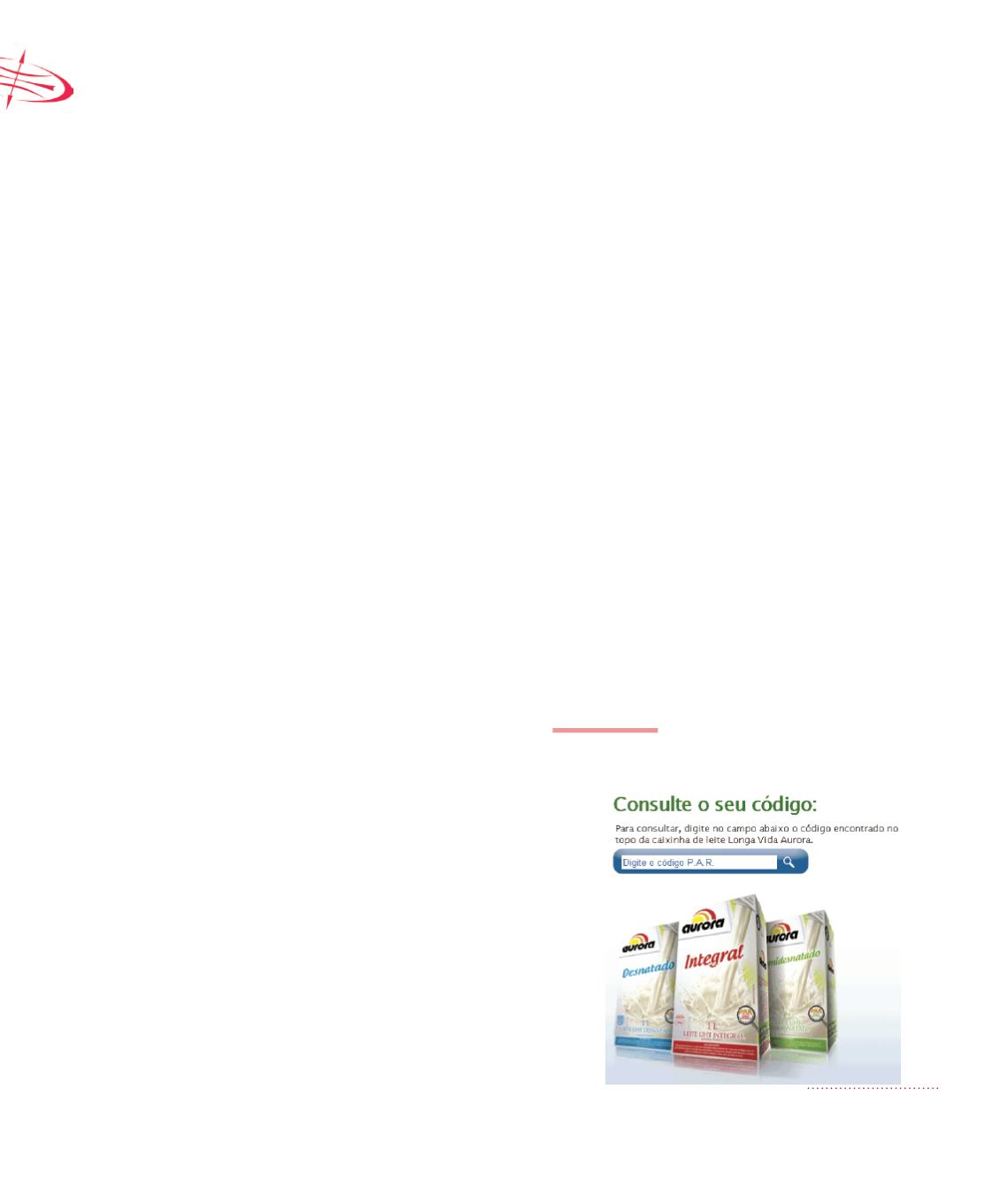
FIGURE 5.45
Traceability system to show
product origin
Source: Press Release
Today we are facing a radical change in consumer
behavior, wanting to know the food they purchase. This
trend is observed since the beginning of the decade and
can deeply alter the supply of new products.
The package plays a fundamental role in
communication with the consumer and can be used as a
tool to connect and inform the consumer of the product
origin. Examples may be seen also in Brazil, such as
traced milk from Aurora, whose program was named
Produto Aurora Rastreado (Aurora Traced Product) (PAR)
(Figure 5.45). The P.A.R. is a system of traceability and
automated quality control. By purchasing P.A.R. Aurora
milk the consumer has access to a code (ten digits)
printed on top of the container through which they can
consult some relevant data regarding production on
the company website, such as the date of production,
the production unit, the production line and the milk
producer, shown on “Google Maps”. The system was
developed by Tetra Pak and is called Active Traceability.
The QR Code is also a resource that can be used
to track the product and will be discussed in Chapter 6
of this publication. An example of this shift in consumer
behavior is the movement of consumption of local
produce, which is gaining momentum in developed
countries and goes beyond regional appreciation, of
pride from acquiring a food grown on local land (Figure
5.46). Of course, this detail is considered in the
purchase decision, but other aspects such as quality
and freshness, and sustainability, are also part of the
motivation for this new consumer. The environmental
impact of food production depends on the way it is
different times: 1932, 1960, 1986 and 1998 (Figure
5.44). The 1932 can, for example, shows the origin of
the chocolate name, the joining of Nestlé with cocoa. At
the time, the product received the spelling “Nescáo.”
The name that still holds today, Nescau, only emerged
in the cans since 1960. In 1986, the package added
the popular slogan “Energy that gives taste”, and the
collection ends with the package from 1998 (EXAME,
2011).
The four cans arrive with the same formula
of Nescau 2.0, 400 grams. The collection can be
purchased in retail outlets throughout the country and
is part of Nestlé’s actions to commemorate the 90th
anniversary of the company in Brazil.
Local Products (Localvore) and with origin guaranteed