



 169 / 231

Brasil
PackTrends
2020
169
quality and new technologies
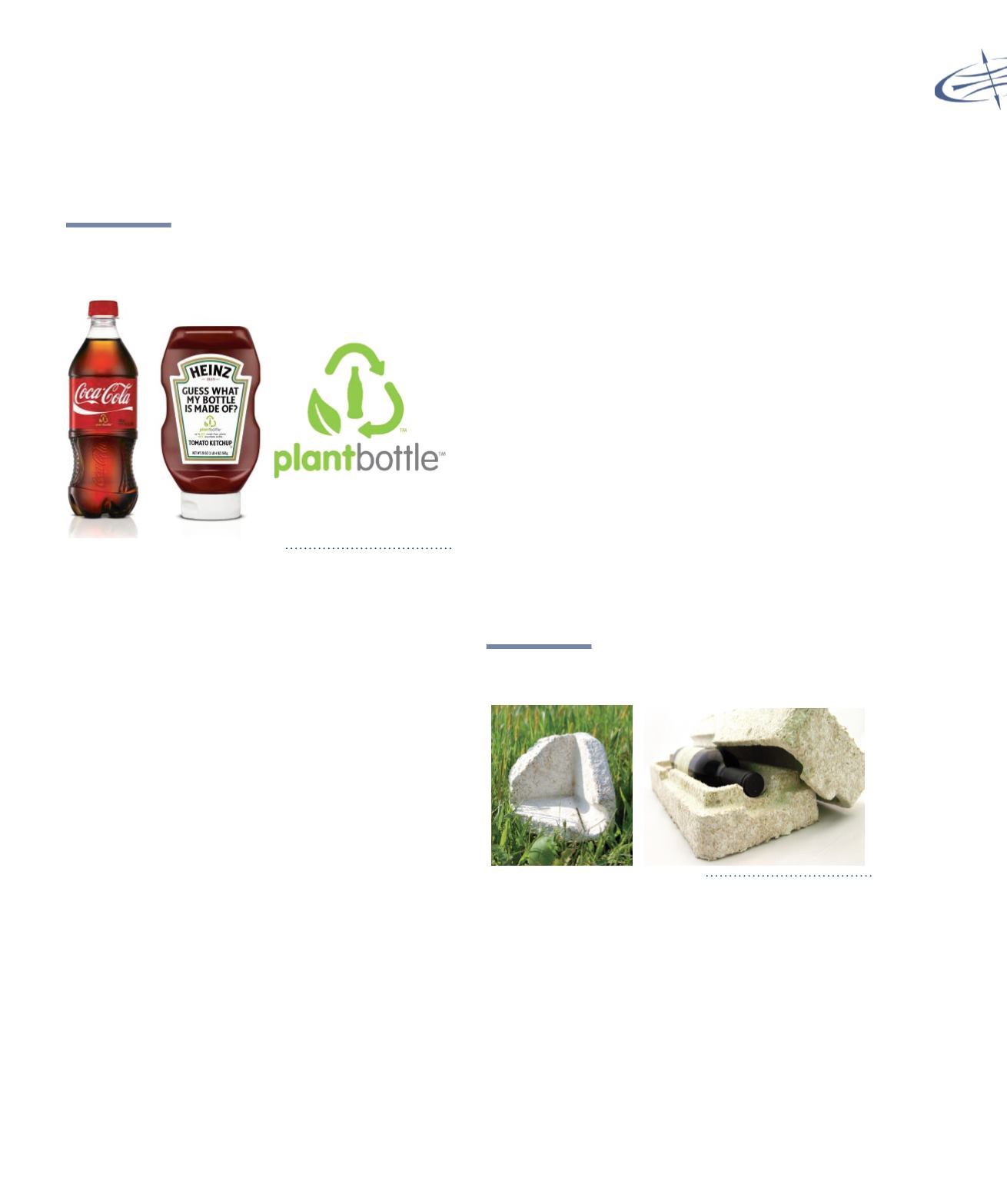
FIGURE 6.32
PlantBottle Technology: 30% of
renewable source raw material
Source: Press Release
Cushioning materials, although are almost always
unseen by the final consumer, are extremely important at
transportation and distribution of added values products,
such as computing equipments, home appliances and
electronics. There are many studies already done and
in progress, seeking for alternatives for the traditional
fossil materials, such as the expanded polyurethane,
polystyrene and polyethylene. One of the alternatives
is the molded pulp, much used with products like
cellphones and small home appliances, but which show
some difficulties in terms of productivity and material
homogeneity, among others. In the biopolymers lines,
the company Ecovative has developed a new material
(Figure 6.33), mycelia-based, something similar to
the mushroom roots. The fungi grow from five to seven
days and develop themselves through the digestion of
agriculture residues, such as husks, straw, etc. The
format is given by the mold where they grow, and the
density can also be manipulated.
Among the biopolymers, besides the cellulosic
materials, the poly(lactic acid) – PLA, starch-based
polymers, and the Green Polyethylene by Braskemare the
main products in the market. The market of biopolymers
for packages is specialized and concentrated, but tends
to be more fragmented in the next decades.
In the field of biopolymers, the challenges are:
overcome the limitations of their properties, especially
for use in food package, increase the availability, increase
the competitiveness with fossil source polymers of
lower cost and solve environmental issues like: negative
impact in the recycling chain of other materials and
lack of collection and infrastructure for composting.
The future is in the packages manufactured with by-
products from food, beverage and wood industries and
agriculture residues.
FIGURE 6.33
Example of material for padding
with sustainable appeal
Source: Press Release
ASSOCIAÇÃO BRASILEIRA DE NORMAS TÉCNICAS.
NBR 15448-
1
: embalagens plásticas degradáveis e/ou de fontes renováveis.
Parte 1: terminologia. Rio de Janeiro, 2008. 2 p.
ASSOCIAÇÃO BRASILEIRA DE NORMAS TÉCNICAS.
NBR
15448-2
: embalagens plásticas degradáveis e/ou de fontes
renováveis. Parte 2: biodegradação e compostagem - requisitos
e métodos de ensaio. Rio de Janeiro, 2008. 10 p.
6.5 REFERENCES
ASTM INTERNATIONAL.
ASTM D 5488-94
: standard terminology
of environmental labeling of packaging materials and packages.
Philadelphia, 1994. Withdrawn 2002.
ASTM INTERNATIONAL.
ASTM D 6400-12
: standard specification
for labeling of plastics designed to be aerobically composted in
municipal or industrial facilities. Philadelphia, 2012. 3 p.