




 59 / 231

Brasil
PackTrends
2020
59
fatores que influenciam o mercado de bens de consumo
Educational Level
Data of Séries Estatísticas & Séries Históricas
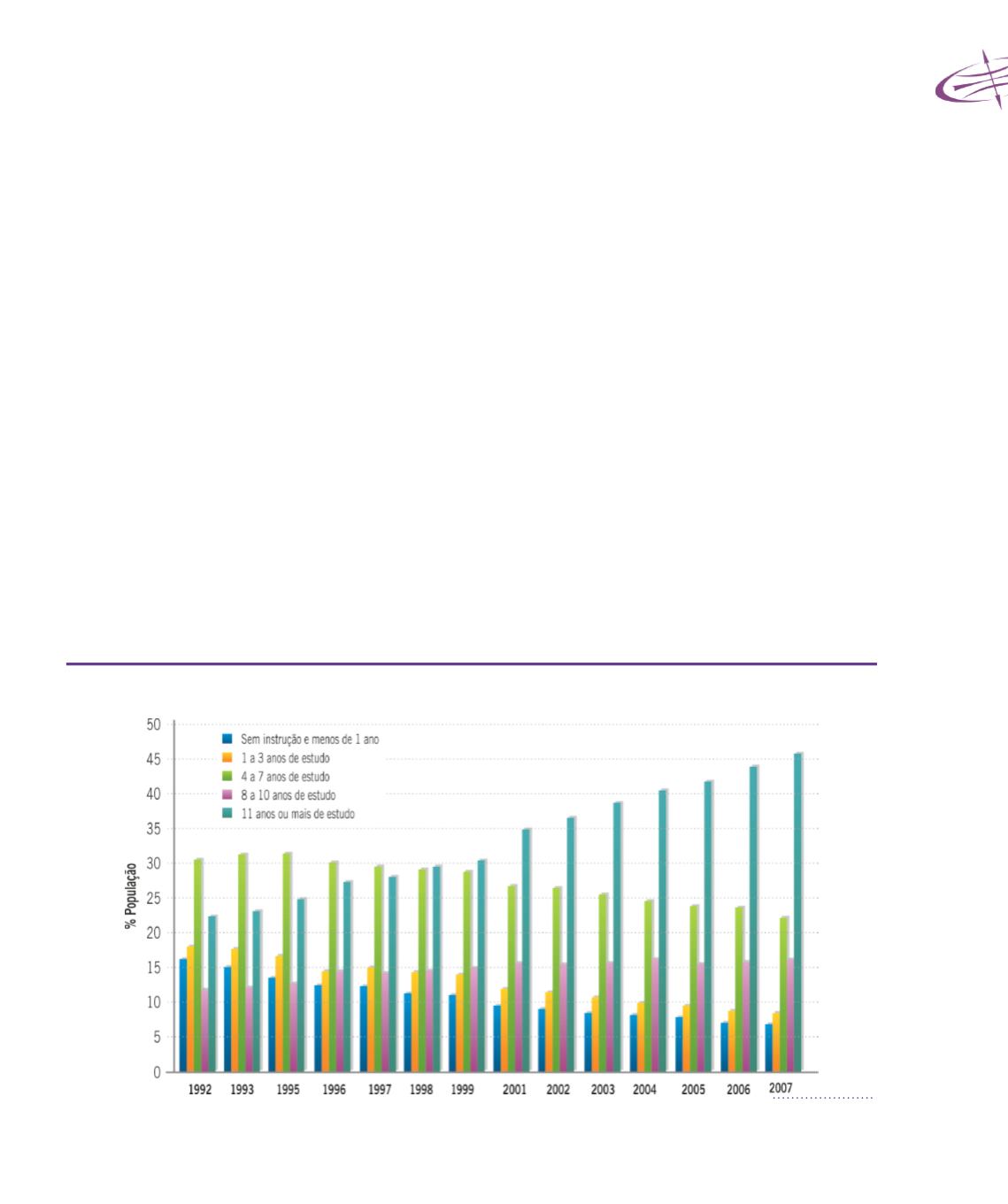
(Statistics Series & Historical Series) (IBGE, s.d.) indicate
that the educational level of the population has shown
improvements in recent years, with a growth of population
with 11 or more years of study, as well as significant
reduction in the percentage of uneducated people and
people with less than 1 year of study (Picture 2.5).
Since higher levels of education are associated to
higher levels of family income, also tends to increase the
ability of consumers to opt for greater variety of items
within each category of consumer goods. Another effect
that tends to occur is the increase on the level of demand
on the quality standard of the products, derived from the
increased availability of information and improvement of
cultural level of consumers.
According to IBGE, the impact of higher education
on family income may be proved by comparing the
average monthly expenses according to different levels
of education (years of schooling) and also based on
differences in household expenses outlined in the
indicator “existence or no existence of a person with
complete or incomplete higher education in the family
composition”.
Picture 2.6 shows that the average monthly
expense of households with 11 or more years of study
more than tripled compared to those with less than one
year of study. Moreover, data from POF 2008/2009
indicate that “families who had no person with complete
or incomplete higher education in its composition had
a total average monthly income of R$ 1,659.99; those
with at least one person with complete or incomplete
higher education R$ 4,296.05, and families with more
than one person, R$ 8,117.27” (IBGE, 2010).
2.4 EDUCATION AND CULTURE
PICTURE 2.5
Population distribution by education level: 1992-2007
Source: IBGE, s.d.