




 55 / 231

Brasil
PackTrends
2020
55
fatores que influenciam o mercado de bens de consumo
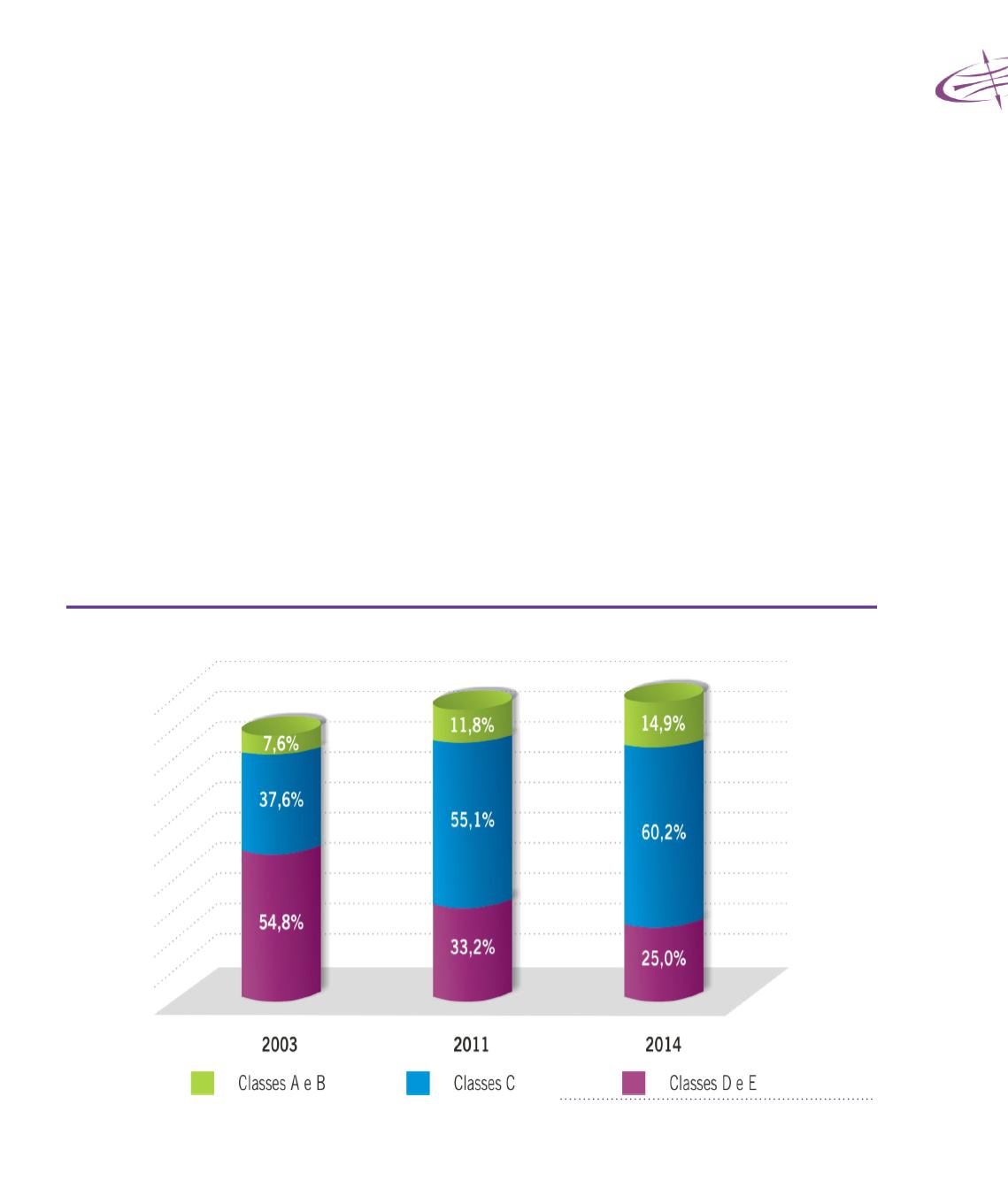
A study of the Social Studies Center at FGV
(NERI, 2012) highlights the increase trend of the
relative participation of Class C (Brazil Criteria) in
Brazilian society, from 37.6% in 2003 to a projected
60.2% in 2014, the increase trend of classes A and B
participation, although at a slower rhythm, and a great
reduction trend in the participation of classes D and E,
from 54.8% in 2003 to a projected 25.0% in 2014
(Picture 2.4).
The Brazilian consumer goods market should
suffer continuing influence of changes in the relative
participation of A, B, C, D and E social classes. These
changes have given more evidence to three distinct
segments, composed of people from the upper stratum
of class A with a very high purchasing power (AAA
segment), of the new middle class expanded and with a
transformed profile due to the incorporation of emerging
consumers from classes D and E, and of the lower
income strata of the population who are still wholly or
partly outside of the consumer market.
Luxury Market Growth: Triple A segment
Researchers from IBRE/FGV (CONSIDERA;
PESSOA, 2012), while acknowledging the advances in
the distribution of wages, partly due to the improvement
in the education level and the real increase in the
minimum wage, consider that, “keeping in mind that the
functional distribution of income is essential to personal
income distribution, it can be said that Brazil will
PICTURE 2.4
Brazil, Social Classes Distribution, 2003, 2011 and 2014 (projection)
Source: Social Policies Center, CPS, FGV (NERI, 2012)
2.3 INCOME AND CONSUMPTION