




 50 / 231

Brasil
PackTrends
2020
50
fatores que influenciam o mercado de bens de consumo
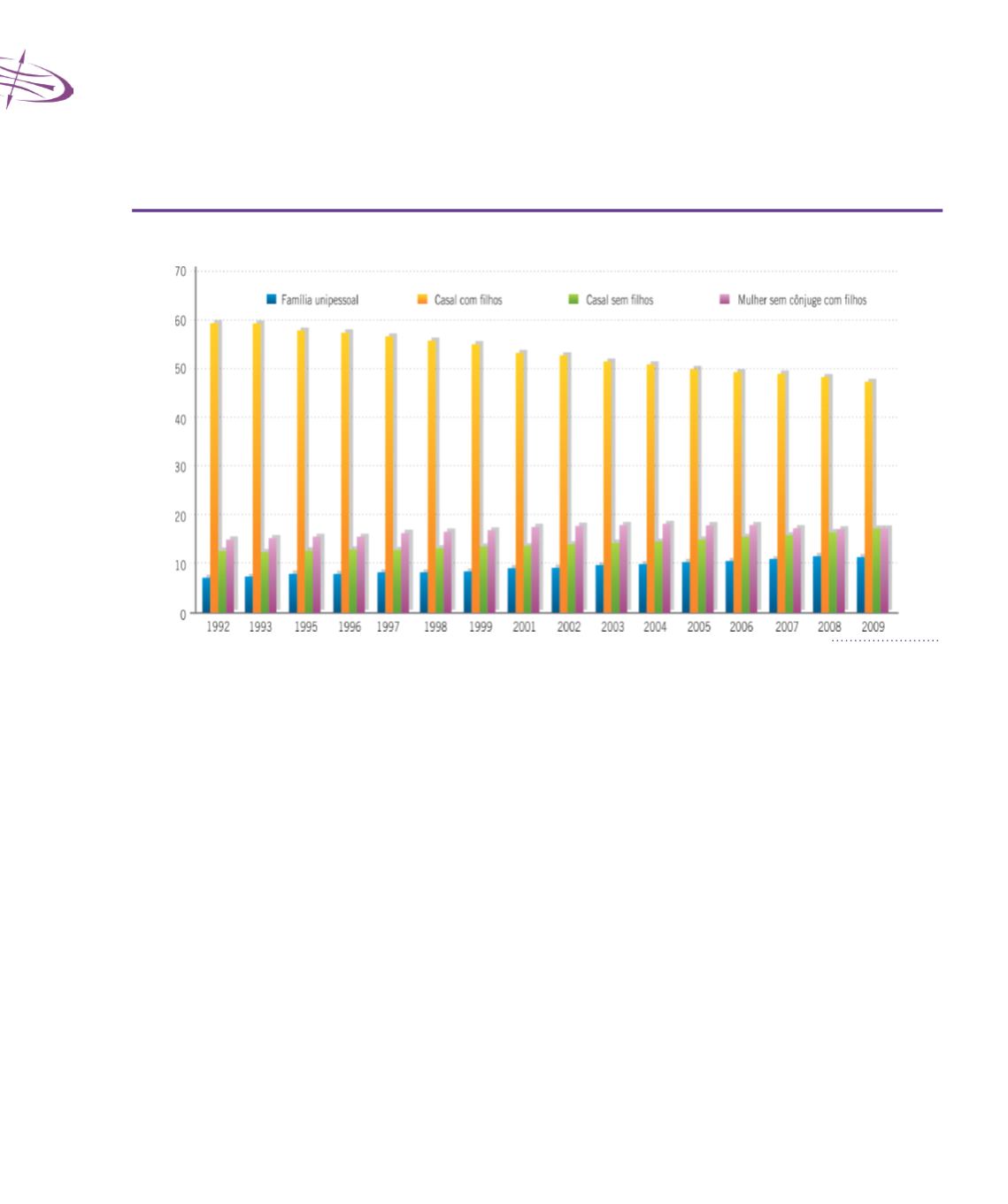
PICTURE 2.3
Family structure in Brazil
Source: IBGE, s.d.
Brazilian economy growth
On the global crisis scenario that began in 2008,
the projected economic indicators require frequent
revisions. Even so, some studies in this direction indicate
situations reasonably favorable to the Brazilian economy
growth. For example, the OECD Economic Outlook study
(2012) estimates growth rates for GDP for the periods
2012-2017, 2018-2030 and 2031-2050, shown in
Table 2.4. It is expected that Brazil reach a growth rate
above all developed countries that comprise the G7,
slightly above to the world average, but lower than other
emerging countries, such as China, India, Indonesia, and
also Turkey (in the first two considered periods).
According to the survey conducted by
PriceWaterhouseCoopers (HAWKSWORTH, 2006), Brazil
will take a prominent position in the world economy in
2050. This study indicates Brazil positioned between
the four largest economies, surpassing Germany and
Japan, considering estimates for GDP growth in terms
of purchasing power parity. It should be noted that in
absolute terms, each of the top three must have a size
of four (U.S. and India) to almost five (China) times that
of the Brazilian economy. In terms of GDP per capita
designed to Brazil in 2050, despite representing an
increase of US$ 8,311 in 2005 to US $ 34,448 in
2050, it will remain below the G7 countries and also in
relation to several emerging countries, like China Russia,
Mexico and Turkey.
2.2 ECONOMY AND POLITICS