




 45 / 231

Brasil
PackTrends
2020
45
fatores que influenciam o mercado de bens de consumo
The evolution of demographic variables indicates
that the next decades will be marked by a developing
market, with many changes in consumption habits derived
from the aging of the Brazilian population, the occurrence
of a demographic bonus, changes in family structure and
population concentration in large urban centers.
Rate of population growth
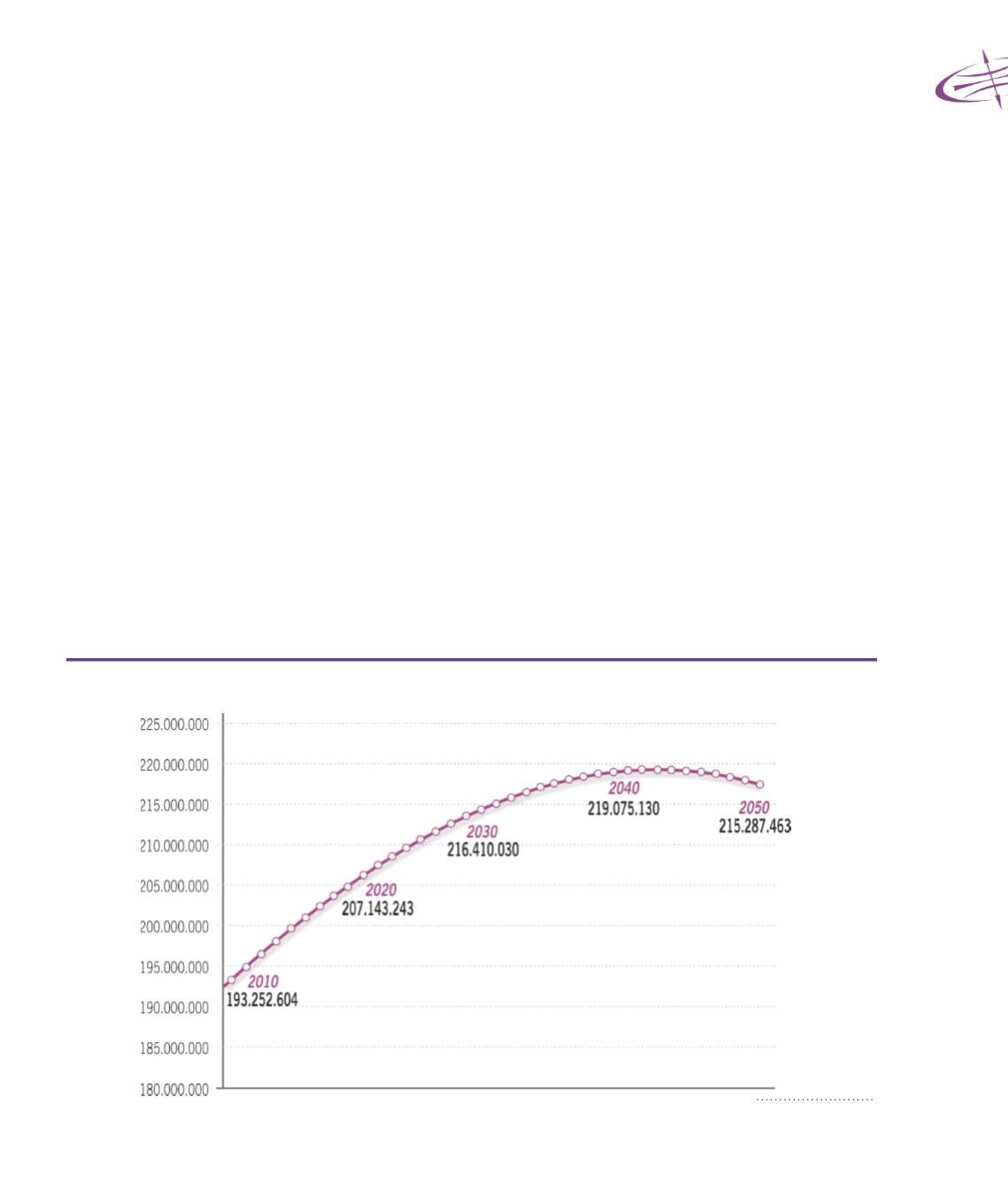
According to data of the Projeção da população do
Brasil por sexo e idade (Projection of Brazil’s population
by age and sex) document, 1980-2050 (IBGE, 2008),
the Brazilian population should show growth until 2039
and, from 2040, it will begin a downward trend (Picture
2.1). Additional 13,890,639 people is estimated between
2010 and 2020, 9,266,787 between 2020 and 2030,
2,665,100 between 2030 and 2040, and a reduction of
3,787,667 people between 2040 and 2050.
Changes in the age structure
Designed from the trends in birth and mortality
rates, population growth (IBGE, 2008) will lead to
changes in the age structure (Table 2.1) which should
influence the profile of the consumer goods market in
the next decades.
In relation to the children and youth population,
from 0 to 14 years, we expect a decrease of 15.9%
from 2010 to 2020, and this trend should accentuate
even more until 2050. The markets of certain products
designed for children, such as pharmaceuticals and
food, will have to adjust to this movement. The same
tends to happen with young people aged 15 to 24 years,
but only after 2030.
2.1 POPULATION
PICTURE 2.1
Total population evolution, Brazil 2010-2050
Source: IBGE, 2008