




 113 / 231

Brasil
PackTrends
2020
113
aesthetics and identity
Hedonist consumption is defined by the principle
of satisfaction and the use of products and services that
bring intrinsic pleasure. Consumption no longer being a
way of resolving a need, but for the wish of happiness,
even if momentary (RIEPING, 2012).
The main characteristic of hedonist consumption
is the search for immediate pleasure, satisfying ones
feelings, stimulating all emotional aspects. An extremely
clear example of hedonist consumption is: after a work
shift, a consumer goes to the mall to browse. Generally
this browse costs her one product which she acquires
while passing the window displays. She passes in front
of a sweet shop and thinks “I’ll buy a box of chocolates
because I deserve it.” This is a clear statement that
this consumer was looking for a product to bring
her pleasure. In this light, the design of the product
must, besides functionality, incorporate a sensational
experience into the product.
Innovations in shape and size, together with
technical advancements in printing, will highlight
products against the competition, revitalizing the
brand, will increase the appetite appeal and attract
the consumer. With this, the item will have a premium
product position in the market and will have a bigger
differentiation when compared with other products.
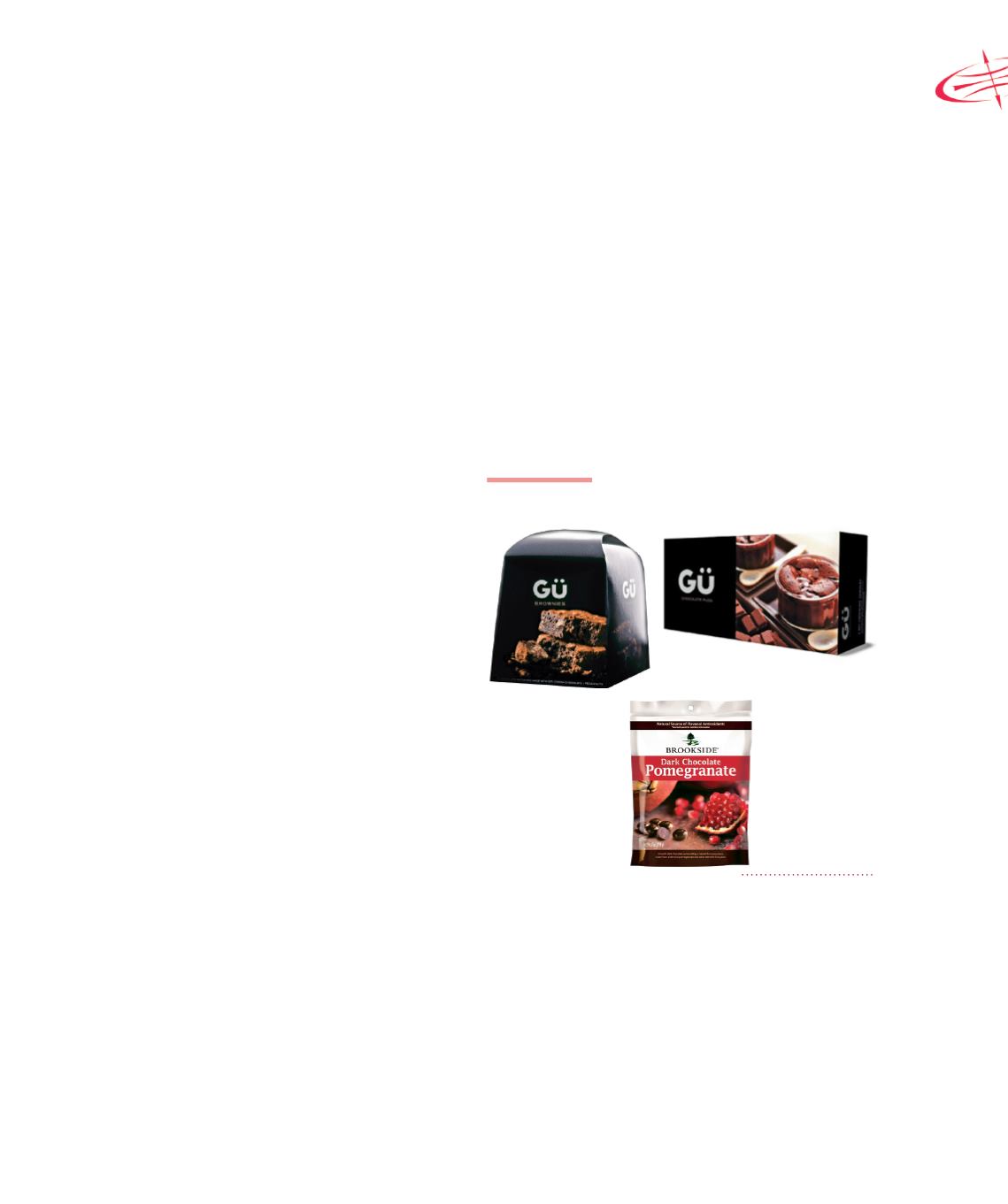
An example of products with an extreme indulgence
in the packages is Gü’s desserts (Figure 5.5). The image
printed on the dark and matte cardboard packaging,
along with the print quality, conveys the excellence of
the ingredients used and creates a look and attractive
feel in the eyes of the consumer, highlighting the unique
and refined taste of their desserts. The attention to detail
incorporated in the package demonstrates the positioning
of a brand of indulgence.
Taste for refined products, pleasure and
satisfaction are the hallmarks that define the trend for
search for “indulgence without guilt” products (adding
new attributes to lower rejection of items which are high
in calories, fat etc., or reducing portion or package size),
products with different flavors and textures (gourmet
products), interactive products and exotic products that
enable new sensory impulse and escape the everyday
(HILL, 2010; REGO, 2010).
Chocolates cause these feelings, especially when
associated with superfruits like pomegranate, acai and
raspberry, highly valued for their antioxidant properties.
The company Brookside combines dark chocolate with
these three fruits and utilizes a flexible package that
can be self-sustaining (stand up pouch) or not, with a
very attractive photo (Figure 5.5).
FIGURE 5.5
Packages for indulgent products
Source: Press Release
Another good example of an “indulgence without
guilt” product which used packaging resources to attract
consumers is the
Five
line of ice cream from Häagen-
Dazs, which, as its name implies, is made with only five
ingredients: milk, heavy cream, sugar, egg yolks and
ingredients that give it flavor (mint, vanilla, caramel
etc.). Furthermore, the clean and refined layout of the
package reflects the brand’s architecture and translates
the concept of the new product (Figure 5.6).
Hedonist consumption: Packages as a source of happiness