




 115 / 231

Brasil
PackTrends
2020
115
aesthetics and identity
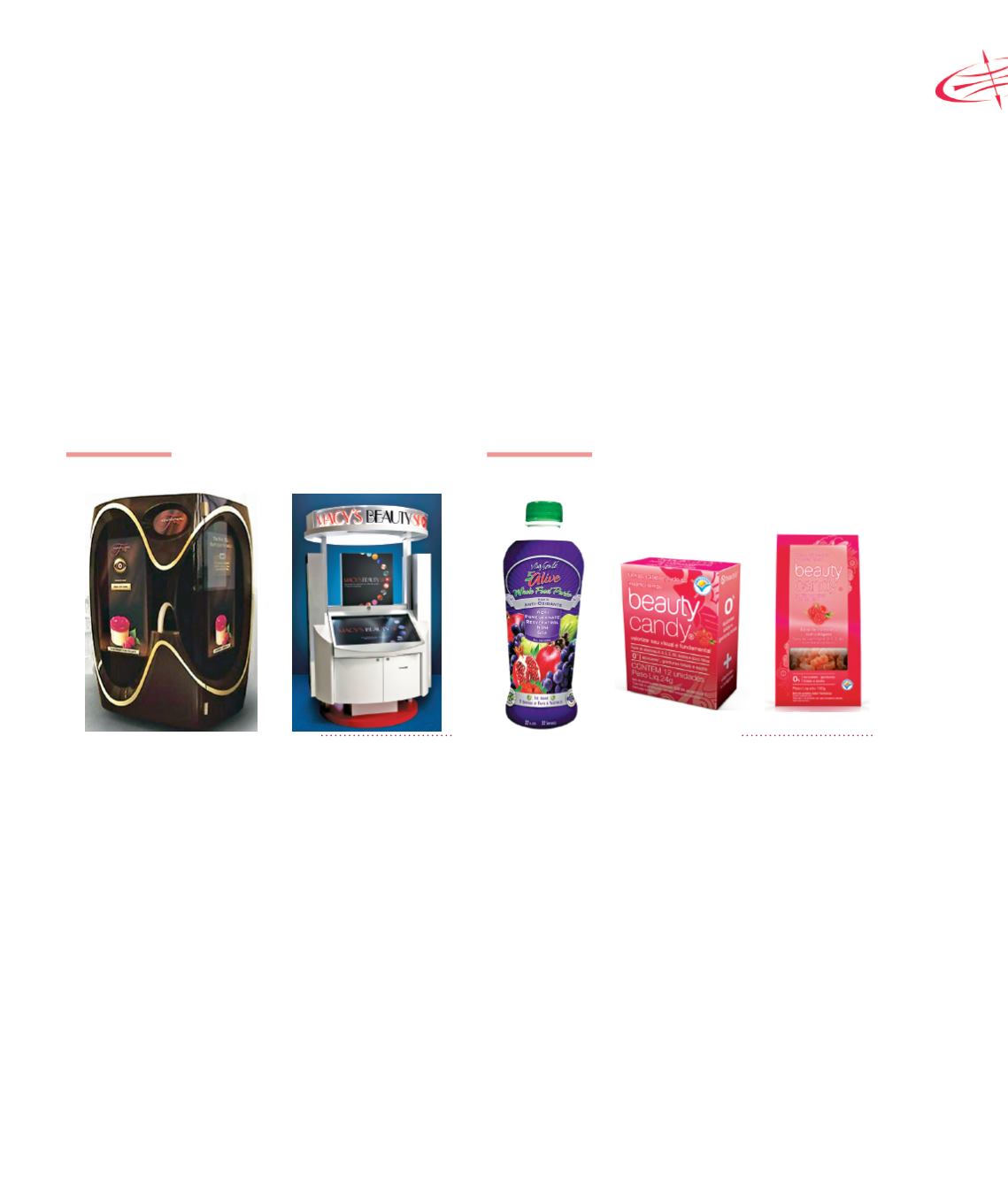
FIGURE 5.9
Packages for well-being products
Source: Press Release
FIGURE 5.8
Interactive Machines
Source: Press Release
when products are placed out of reach or are behind the
counter (Figure 5.8).
Other aspects of hedonistic consumption are
related to health and well-being diets, with improved
physical appearance and beauty. In such cases, the
packaging must be clear enough to convey to the
purchaser and future consumers the purchase benefits.
The ViaVienté, 5Alive and Beauty Candy products are
examples of where you can observe how packages can
attract the consumer’s attention (Figure 5.9). Beauty’in
is the brand of “cosmefoods” (foods with cosmetic
properties) created in 2010 and Beauty Candy is a
collagen-based bullet that had their packages of 150
grams exchanged because the old stand up pouches
confused consumers. According to the brand owner,
consumers mistook the bullets in the old packaging with
cosmetics refills. The new package is a cartridge (more
like food packages) and the window facilitates product
identification by the consumer (MAIS..., 2012).
5.2 PACKAGING RENOVATION
Use of symbols, colors and special shapes
The use of visual elements is an important tool
for providing recognition and brand identification.
Packaging is one of the most important intermediaries
between the consumer and the brand, is their first
contact with the product. Thus, the companies should
seek to differentiate with innovative and high impact
designs in order to highlight their products among the
options available in retail outlets.
To build a brand identity efforts should be directed
towards the creation of a symbol or logo combined with
expressions that define its essence, personality, style
and competitive positioning. The brand identity can be
constructed through names, letters, emblems, pictures
or symbols able to differentiate it from other brands and
provide its rapid recognition, as in the examples shown
below (Figure 5.10). A brand should always be linked to
the image of the company and represent the consumer
expectations through cognitive resources (HILL, 2010;
SERAGINI, 2010; BRANDT, 2010).