




 152 / 231

Brasil
PackTrends
2020
152
quality and new technologies
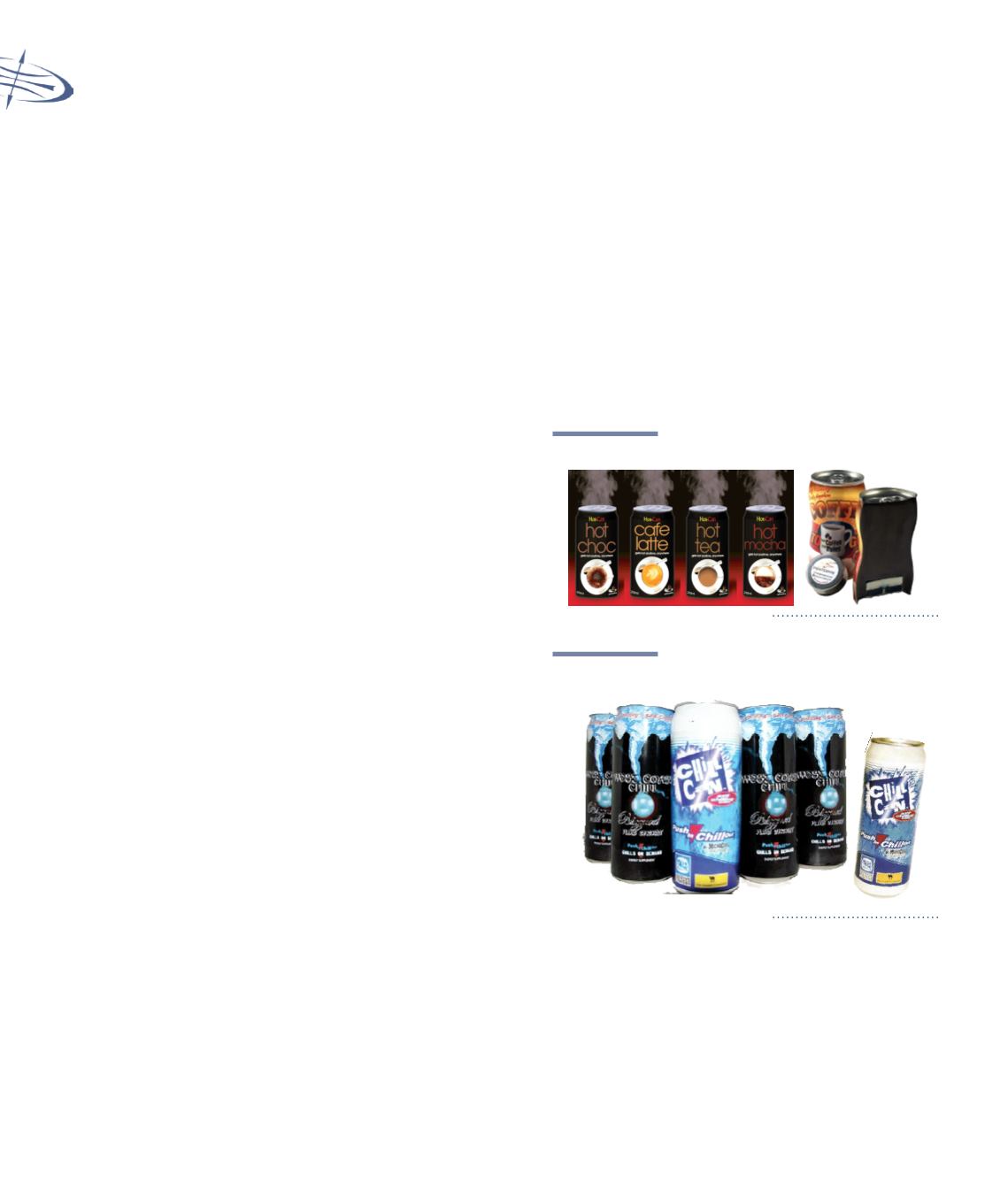
FIGURE 6.14
Self-heating packages
Source: Press Release
FIGURE 6.15
Self-cooling packages with
Source: Press Release
It is expected that the nanotechnology shall bring
innovations, especially in the sector of package self-cooling
for beverages and that other technological platforms such
as the combination of thermoelectrical and photovoltaic
systems will be able to be used. Issues of sustainability
associated to the recycling of the packages and use of
non-aggressive to the environment cooling liquids, will be
very important matters at the developments.
or by humidity. That encapsulated aroma release
technology can be applied to various manufacturing
processes of plastic packages: blow moulding, injection,
thermoforming, extrusion and in liners and gaskets. It
can also be applied in inks and coatings. The coating can
be done on plastic packages and on cardboard.
The appeal of the technology involves consumer
satisfaction and even satiety. The aroma can be released
inside or outside the package. The emitters can be used
as a complement to food aromas or replacing the food
compounds that might be harmful to health.
Package systems that heat up or cool down the
products attract consumers due to the great appeal of
convenience. Exothermic reactions are used for self-
heating, such as water and calcium oxide – CaO. For self-
cooling, an endothermic chemical reaction that steals heat
from the environment can be used, or the heat pump, that
uses steam or another compound, such as CO
2,
as cooling
fluid for heat transfer. Those technologies are normally
associated to devices attached to the packages.
There have been some packages that are self-
heating, which were initially developed for coffee
beverages and now also hit the market of read to eat
soups. There are only a few examples of packages that
are self-cooling, aiming at the beverages market, though
that topic has been researched for more than one decade.
The Hot-Can self-heating technology (Figure 6.14)
consists in an aluminum can with double chamber, which
contains the product in the external chamber and water with
calcium oxide, separated by a membrane in the internal
chamber. When a button on the base of the can is pressed,
those compounds get mixed and generate and exothermic
reaction that heats up the product in the external chamber
(Figure 6.14). HeatGenie is another example of self-heating
package based on solid fuel, which will generate energy
converted into heat in a controlled manner. The fuel stays
held in a compact module attached to the base of the
package (Figure 6.14).
In Italy, one company sells coffee beverages in
packages that uses the endothermic reaction technology
between thiosulfate pentahydrate and water for cooled
beverages. Another example is from Joseph Company
from California, the can called ChillCan (Figure 6.15),
that generates a fast expansion of the pressurized CO
2
that evaporates and cool down the beverage in minutes.
Self-heating and self-cooling packages