




 151 / 231

Brasil
PackTrends
2020
151
quality and new technologies
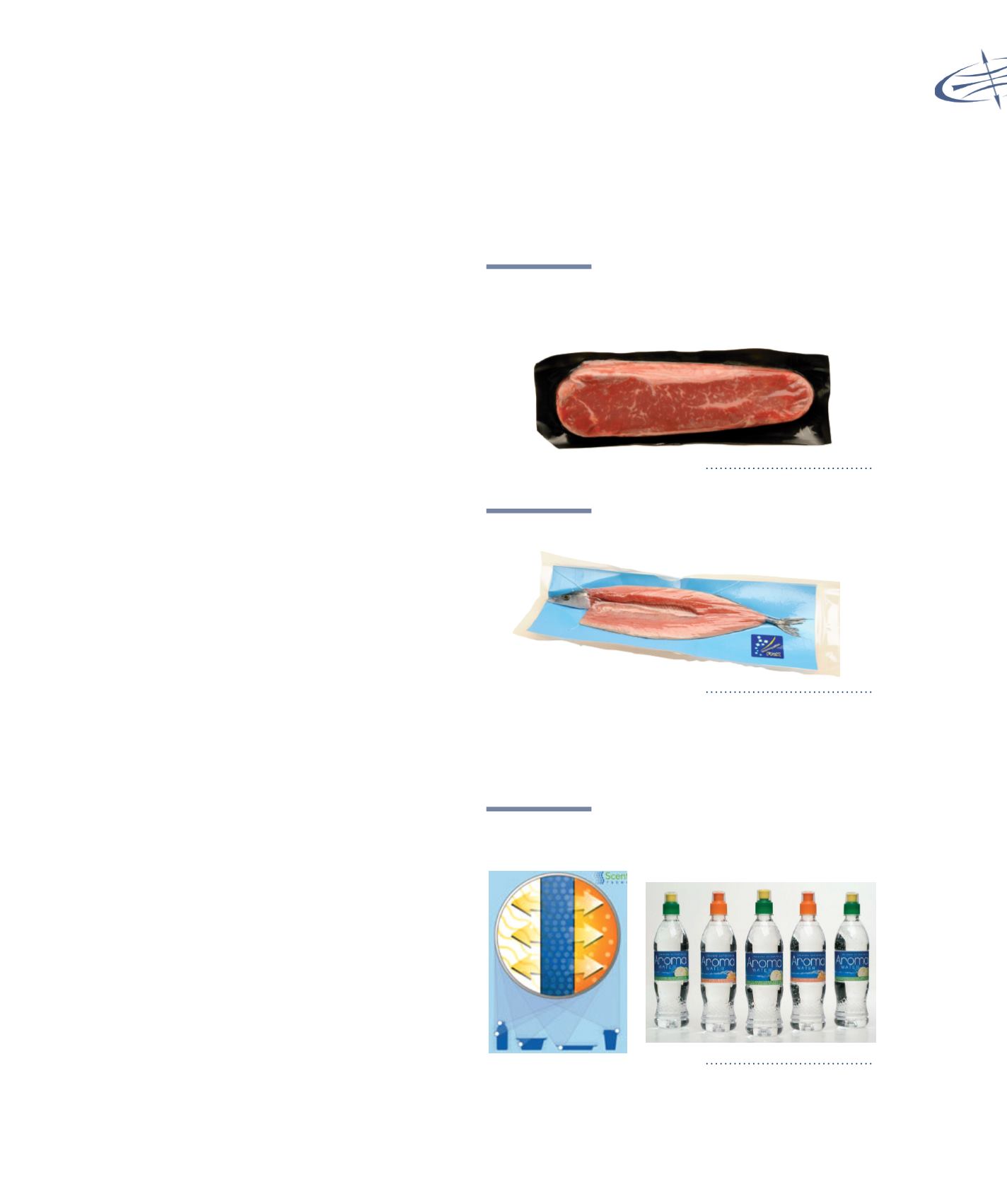
FIGURE 6.13
Scent release inside or
outside the package
Source: Press Release
One of the most commercialized products in
Brazil is fresh meat. The vacuum packages used for fresh
beef gives a long shelf life to the product, from 2 to 4
months, but they affect the product appearance, giving
a purple color to the meat caused by the lack of oxygen,
reducing the appeal for selling at retail. Aiming to sort
it out, the company Curwood developed the technology
FreshCase, which involves the use of sodium nitrite on
the film layer in contact with the meat (Figure 6.11).
The nitrite, in contact with the meat, turns into nitrous
oxide, a gas which reacts with the meat pigment, the
myoglobin, making it with the reddish coloration wished
by the consumer (REYNOLDS, 2012).
Another example of special film is used on the
freezing system developed by the Japanese company
Mustumi, which uses electric current for fast freezing of
the product, minimizing the oxidation and reducing the size
of the ice crystals that are formed on the food cells. The
film used as the package is electroconductive, enabling the
freezing process that preserves flavor and texture of the food
and increases the shelf life (Figure 6.12).
FIGURE 6.11
Active package for keeping
the reddish coloration
on the fresh meat
Source: Press Release
FIGURE 6.12
Electroconductive film
Source: Press Release
Special films for meats
This new area of development brings high interest
to the concepts of the correlation of brand to the
multisensoriality and to the growing acceptance of the
importance of aspects such as emotions and memories
at the shopping decision (RAITHATHA, 2009).
One of the main companies in this sector, the
Scent-Sational Technologies, holds the patent of the
encapsulated aroma release technology, approved for
contact with food, beverages, personal hygiene products
and pharmaceuticals. The microencapsulated scent can
be applied as a coating onto the package (film, bottle,
cap, board, pot, glasses, etc.) at production line (Figure
6.13). While handling, the microcapsules of aroma are
ruptured and the scent is released. The release activation
can also be done by heating, for example, in themicrowave
Aroma and flavor emitters