




 150 / 231

Brasil
PackTrends
2020
150
quality and new technologies
FIGURE 6.10
Label that turns into soap
at the fruit washing
Source: Press Release
alcohols, gases (chlorine dioxide,
triclosan
) and natural
extracts. Cinnamon, clove, garlic, oregano, rosemary
and grapefruit seed extracts, when incorporated into
package systems, have been effective against the
microbiology deterioration. Traditional fungicides used
in agriculture such as benomyl (C
14
H
8
N
4
O
3
) and imazalil
(C
14
H
14
Cl
2
N
2
O) have been incorporated in plastic films
showing antifungal activities.
Since the most of antimicrobial agents have
different action mechanisms, the mixture of active
compounds can increase the shelf life through a
mechanism of synergy.
The antimicrobial agents can be directly
incorporated into the package material, in the form
of a mechanical mixture at the polymer processing or
chemically immobilized and applied as a coating. In the
chemical immobilization, covalent bonds immobilize
the antimicrobial agent in the polymeric structure and
an intense contact between the package and the product
is necessary, such as what happen with vacuum-packed
products and low viscosity liquids.
The main focus on the development will probably
be the mechanisms of manipulation of the antimicrobial
agents, their liberation kinetics and the natural
antimicrobials, incorporated in synthetic polymers or in
biopolymers. The preference for the natural antimicrobials
is due to the possibility of ease getting a legal approval
and attending the requirements of the consumer who
seeks healthier food and natural products.
The main challenges can be summarized in:
meeting the legal requirements related to the approval
for food contact; tradeoffs related to adverse effects
over the product, the consumer health and/or the
environment; lack of efficacy evidences; need of direct
contact with the active agent and high costs.
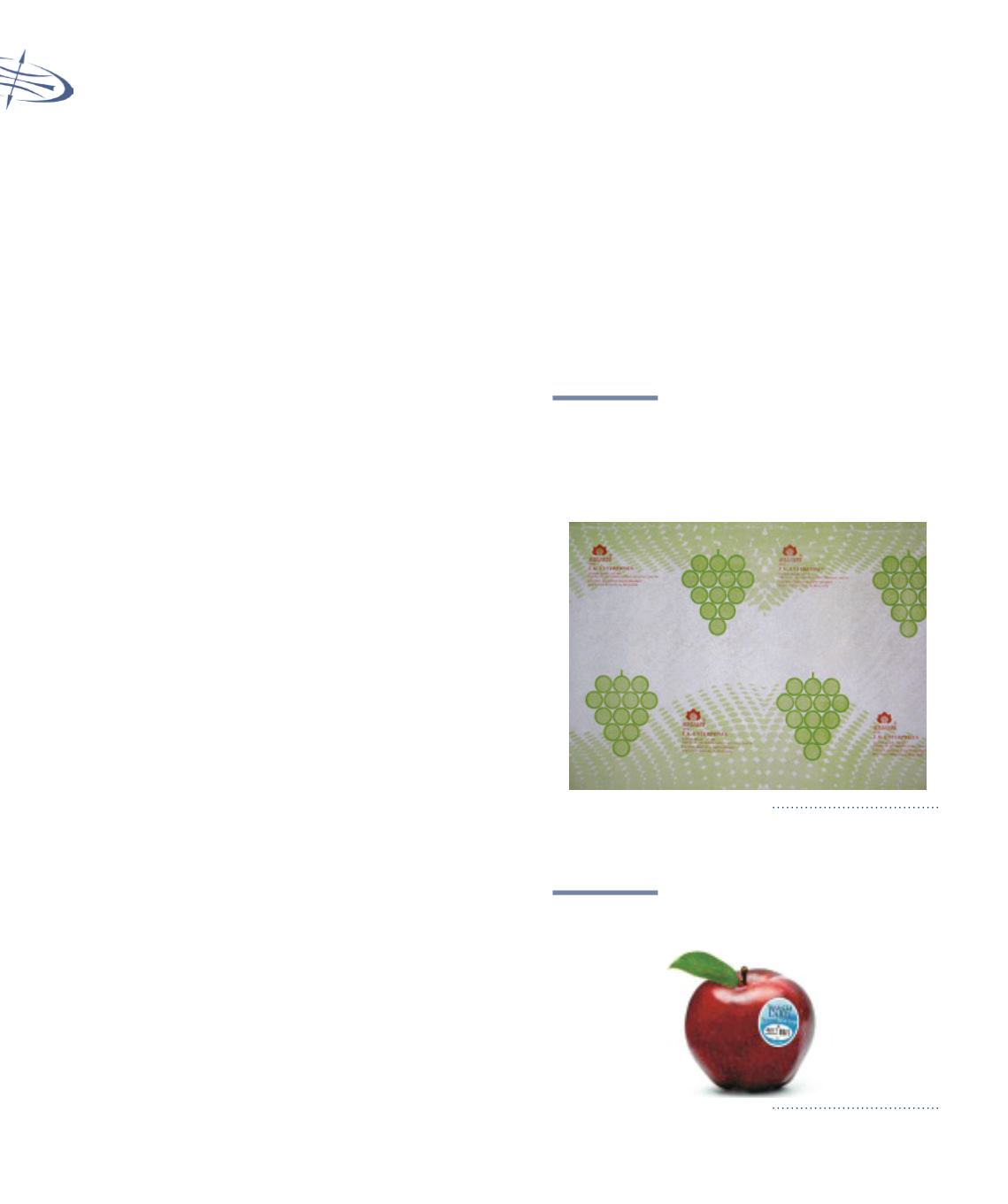
FIGURE 6.9
Sulfur dioxide quick release
emitter – Grape Guard. Sodium
metabisulfite is the active
compound applied in laminated
films for grape preservation
Source: Press Release
Although this is not a commercial reality, the
Fruitwash Label might be a trend related to labeling.
The current labels, besides being hard to remove, are
most used only for producer identification and, in a few
cases, they are used as a source of information about
the fruit origin and allow the inclusion of a barcode. The
Fruitwash Label (Figure 6.10) turns itself into soap as
the fruit is washed, helping to remove the dirt and other
residues that might be on the product suface.
Hygenization