




 154 / 231

Brasil
PackTrends
2020
154
quality and new technologies
FIGURE 6.17
Active ink-based time-
temperature indicator
Source: Press Release
line and initiates the freshness indication and the end
of shelf life. It can be calibrated to match different
deterioration mechanisms and product shelf life in
function of the temperature.
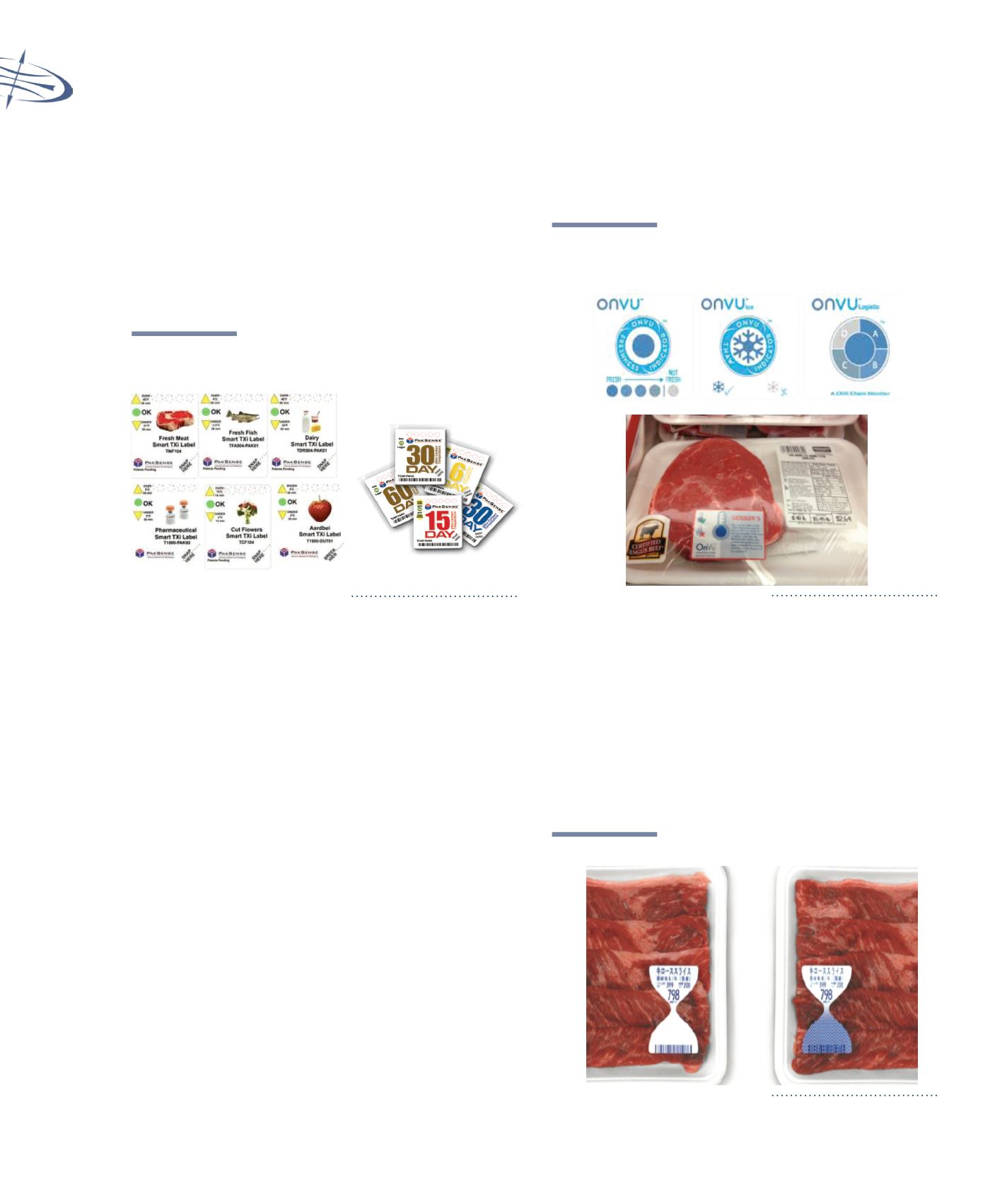
FIGURE 6.16
PakSense’s time-
temperature indicator
Source: Press Release
Quality, freshness and ripening indicators have
similar functionalities to the temperature indicators;
however, they measure the compounds directly related
to the product quality, resulting from microbial growth
or chemical or biochemical reactions. There are still
some challenges concerning the ease of application and
costs, being also under the legislation for food contact
material (RAITHATHA, 2009).
A freshness indicator example has been developed
by To-Genkyo. The indicator consists in a label which
has its color changed when reacting with the ammonia
produced by the microbiological degradation of meat
products. At the color changing, the barcode becomes
illegible to the scanning system, making the sale no
longer possible. The label has the shape of an hourglass
and the consumer is taken to recognize its function
intuitively (Figure 6.18).
The Jenkins Group, in New Zealand, in partnership
with HortResearch, has developed a ripening sensor, the
RipSense, which reacts with the aroma released by the
fruit during the ripening, changing color and allowing
the consumer to choose the ripening level of the fruit
according to its preferences. The sensor is initially
red, gradually turns into orange and finally gets yellow
(Figure 6.19).
FIGURE 6.18
Freshness indicator
Source: Press Release
Quality, freshness and ripening indicators