




 163 / 231

Brasil
PackTrends
2020
163
quality and new technologies
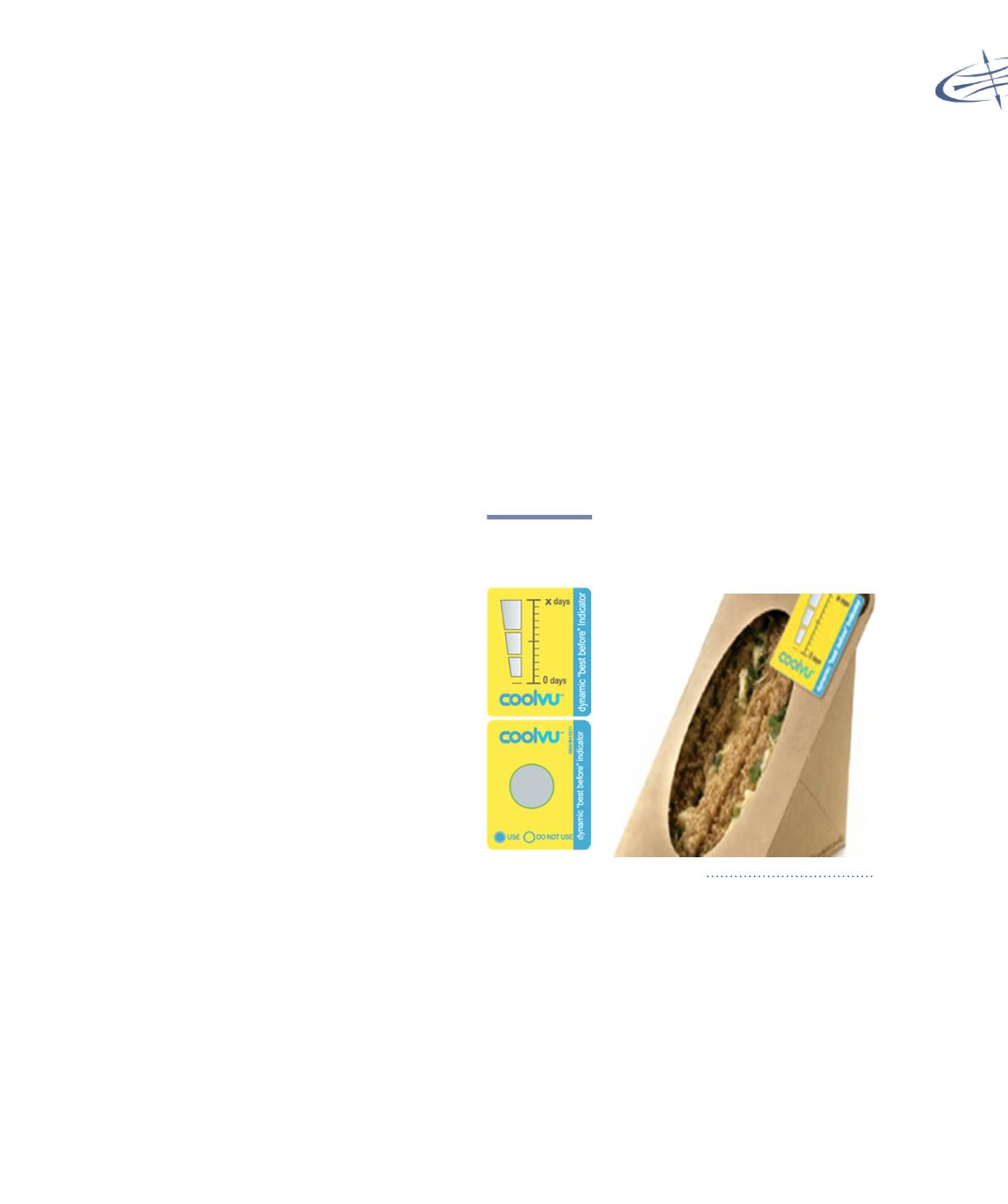
FIGURE 6.30
FreshPoint’s time-
temperature indicator
Source: Press Release
electric signal. Some nanosensors gather receptive
and transductive elements, which mean that they
can detect changes and act according them. Some
examples are the microbiological growth sensors that
release preservatives. The nanosensors show advantages
such as high sensitivity and selectivity, fast response,
portability and compatible cost with the application
in mature markets. The innovations in the field of
portable biodetection, especially the ones based on the
bionanosensors platform in replacement of traditional
immunologic tests, have been motivated not only
by the high risk infectious diseases, but also by the
bioterrorism. Nanomaterials built with nanolayers from
different metals (gold, silver and nickel) are capable of
work as nanobarcodes to detect the botulinum toxin,
anthrax and a variety of pathogens.
The oxygen sensors with smart inks that change
their colors in contact with oxygen are examples of
smart packages that can alert suppliers, retailers and
consumers about alterations in the product by the action
of the oxygen. An example of applied nanotechnology
on oxygen sensors is the AgelessEye by Mitsubishi Gas
Chemical, which turns into pink at the lack of oxygen
in the package and into blue when it detects oxygen
in the package headspace. It is expected that the
advancement in the use of nanomaterials increase the
sensitivity of those sensors and allow faster responses
and more intense coloration changes.
Besides the sensors, a launch of an indicator
using nanotechnology (Timestrip’s nano-TTI system) is
the iStrip, designed to detect the accidental freezing of
refrigerated products. The system is based on colloidal
gold (nanomaterial), which is red at temperatures above
0°C, but the freezing agglomerates the gold nanoparticles
that results in a transparent solution indicating an
accidental freezing of the product.
The company FreshPoint sells a series of time-
temperature indicators called CoolVu, for temperature
sensitive products. They work as an expire date label. The
label is assembled from a metal label and a transparent
label containing an etchant. At the packaging line, the
indicators are applied on the package, activated and
begin to show to suppliers, retailers and consumers the
shelf life of the product. They are calibrated according to
the product sensitivity to the temperature (Figure 6.30).
The possibilities of improvement of the barrier,
mechanical and thermal properties of the package
materials through the application of nanotechnology will
help the use of biopolymers, which properties are one
of the limiting factors for its application in packaging.
Montmorillonite and kaolinite clay, graphene, cellulose
nanofibers and chitosan are promising, though there
is the need for researches for optimization of the
biopolymer/nanoparticle/plastifying system and for the
improvement of processing technologies.
Some examples of nanocomposites-based
biopolymers are the NanoBioTer
®
(to be approved) and
Degradal
®
(under development, by Nanobiomatters) that
incorporates additives in nanometric scale to control
Improvement of biopolymers properties