




 190 / 231

Brasil
PackTrends
2020
190
sustainability & ethics
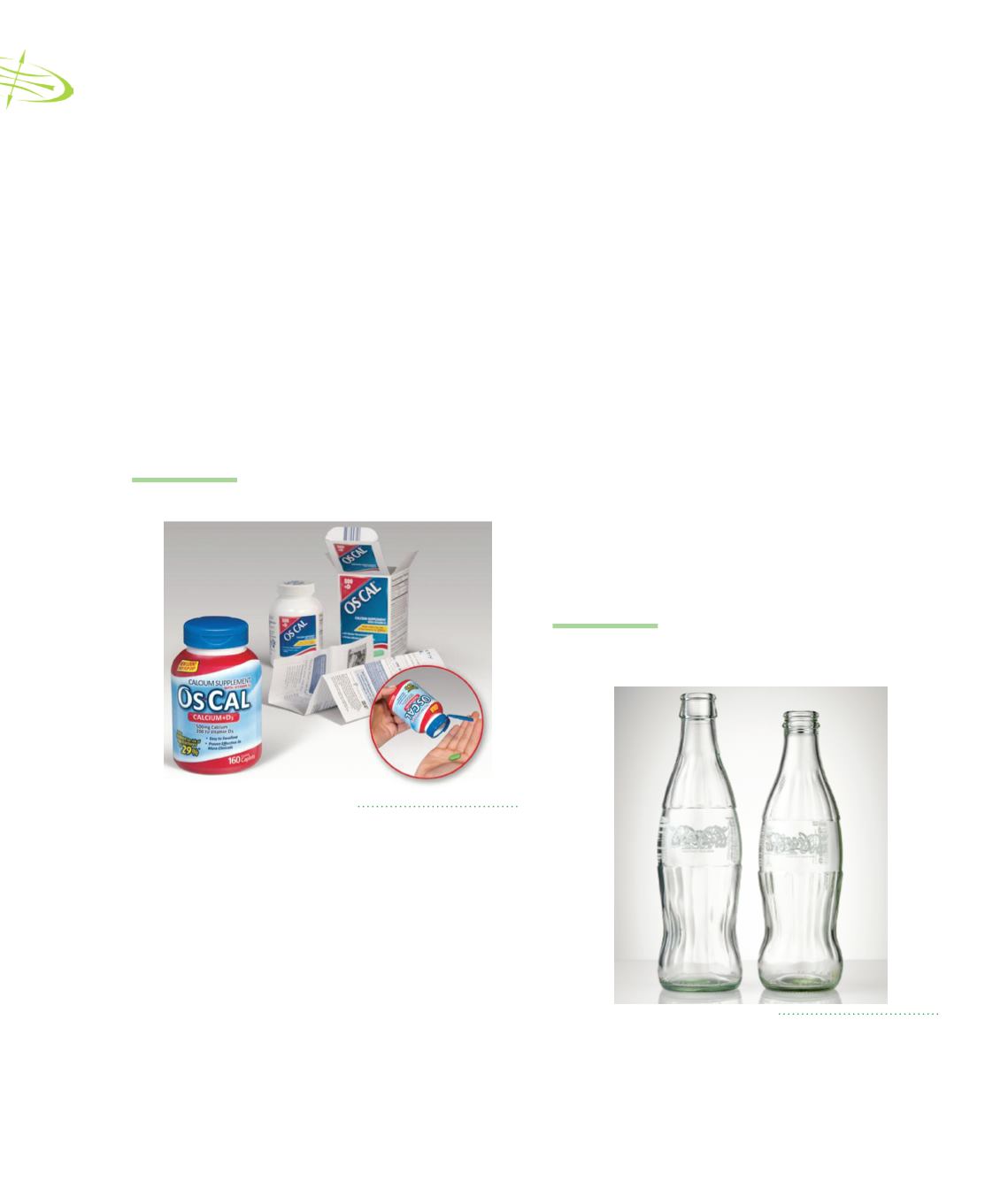
Another good example of package optimization
has been adopted for the Os-cal calcium supplement
(
FIGURE 7.13
) from GlaxoSmithKline (GKS) company.
In 2010, GSK launched a new packaging system,
eliminating the labeling and secondary cardboard
packaging, transferring information required for a shrink
label along the entire body of the primary container of
high density polyethylene. For the annual sales volume,
the company disclosed that saved 208 tons of paper and
reduced the carbon emissions by 150 tons (MOHAN,
2010).
FIGURE 7.13
Example of package optimization
Source: Press release
Reducing the weight of packaging is one of
the main ways to act to lower consumption of natural
resources. With the optimization of production processes
and investment in new technologies, you can often get
a significant reduction in the use of renewable or non-
renewable natural sources. This reduction, however,
must be validated technically so there is no compromise
in the quality of the packaged product.
In practice, only significant reductions bring
environmental improvements that contribute to the
valorization of the brand (HILL, 2010).
In the glass containers sector there is also
a strong movement for the weight reduction with
significant benefits both financial and environmental,
since it involves the reduction on the natural resources
consumption (raw material needed for glass fabrication),
less water and energy consumption and less costs related
to the finished product, with consequent reduction of
greenhouse gases emission, especially CO
2
.
Originally produced in 1916, the contour bottle
in the shape of Coca-Cola is a globally recognized icon
that allows quick identification of the brand by the
consumer. In 2007, the company introduced its new
pack of 330 mL “ultra” light-weight, 20% lighter,
going from 263 to 210 g. The packaging has even a
slight change in shape, becoming wider 0.1 mm and
about 13 mm lower than the original package (FIGURE
7.14). With a lighter package was estimated reduction
in annual consumption of 3.5 thousand tons of raw
materials and reduction of 2.2 tons of CO
2
(HILL, 2010;
FAMOUS..., 2007).
FIGURE 7.14
Example of redesign/weight
reduction of glass package
Source: Press release
In Brazil, Coca-Cola
Guararapes
and Coca-Cola
Norsa
(Coke’s franchises in the States of
Bahia
,
Ceará
,
Piauí
and
Rio Grande do Norte
) also bet on a new 290