




 195 / 231

Brasil
PackTrends
2020
195
sustainability & ethics
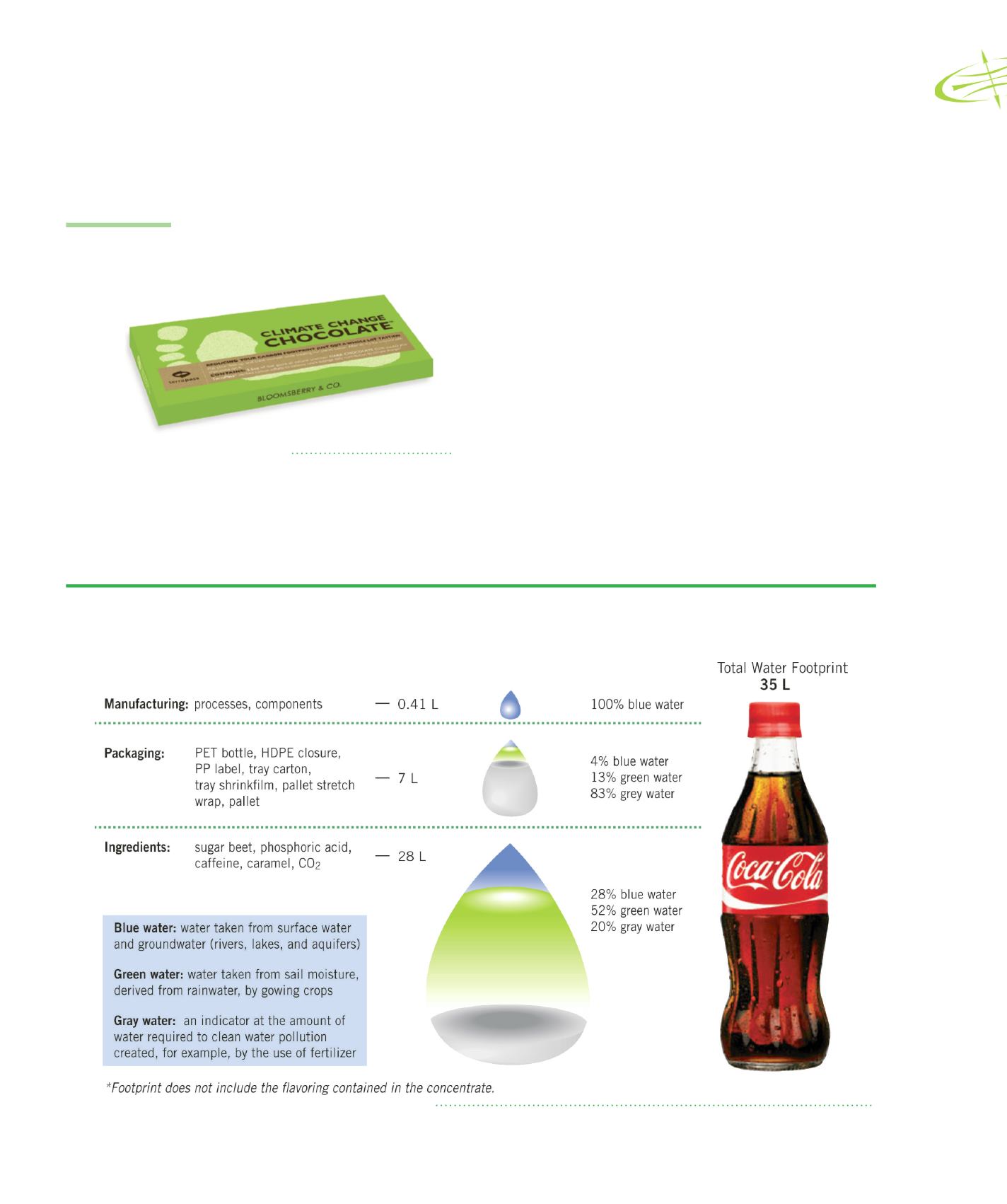
FIGURE 7.22
Water footprint obtained from the 500 mL Coca- Cola
PET bottle, performed in Dongen, Netherlands.
Source: Adapted from COCA-COLA ENTERPRISES, 2009
FIGURE 7.21
Product with carbon
footprint appeal.
Source: Press release
Concerning that new demand, Coca-Cola
disclosed a pilot study made in its plant in Dogen in
Netherlands, in 2009, in order to calculate the water
footprint of their commercialized product, the PET
bottle 500 mL, but stressed that the values may vary
significantly depending on the calculation method used
(
FIGURE 7.22
). From this study, it was observed that
the water footprint incorporated to the product was
35.4 liters and, that, the use of water for producing
sugar from beet, one of the ingredients of the product
represented 76% of the total water consumption (COCA-
COLA ENTERPRISES, 2009).
However, it must not be forgotten that those
leads refer only to some specific aspects of the
interaction between product and environment. The total
environmental profile of any product or service cannot
be evaluated only through these measurements.