




 200 / 231

Brasil
PackTrends
2020
200
sustainability & ethics
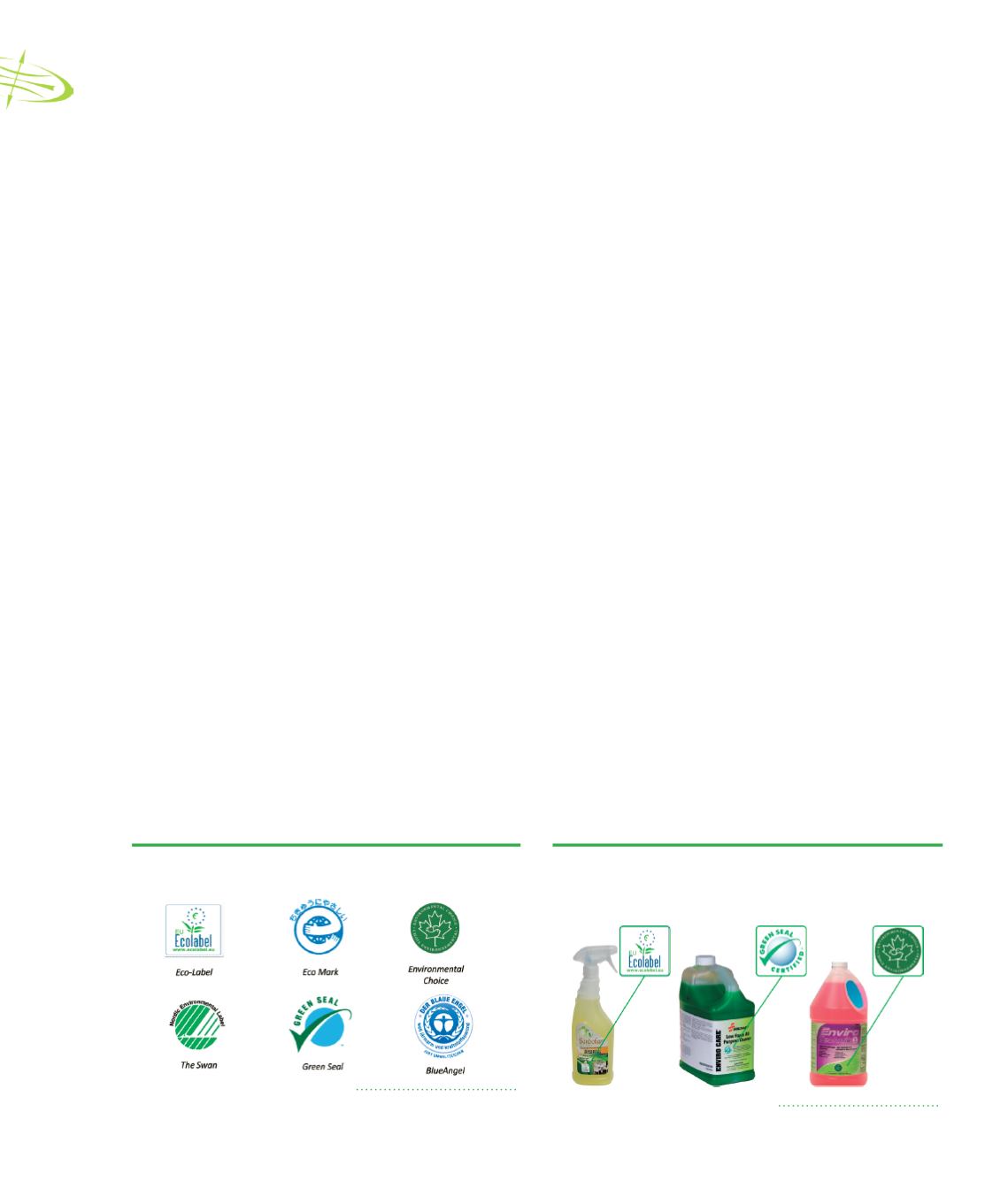
PICTURE 7.28
Examples of products
with ecolabels
Source: Press release
PICTURE 7.27
Examples of ecolabels
Source: Press release
sectorial reports, such as the one by the National
Industry Confederation (CNI, 2012). The report,
available in Portuguese and English, has the objective to
describe the Brazilian aluminum industry profile to the
global community. Brazil has some peculiarities such
as the use of a renewable energetic matrix, formed of
hydroelectric power plant renewable energy and a high
recyclability rate (36% of total produced aluminum and
97.6% of the manufactured packages), which gives it
a competitive differential for its carbon footprint of 4.2
The credibility of the products has been
attested using standardized environmental labels and
declarations. Both are volunteering and offer information
about the environmental benefits of a service or product
in general terms or one or more specific environmental
aspect. The objective of the ecolabeling is to promote
the demand and the supplying of a product or service
with less environmental impact, stimulating, this way,
the potential for continuous environmental improvement
dictated by the market (ABNT, 2002). In order to
achieve that objective, environmental declarations and
ecolabeling must be accurate and verifiable and also
must have a high reliability level so their communication
is effective and can be understood by the consumer, the
ecolabeling target audience.
The environmental performance certification of
tons of CO
2eq
per ton of produced aluminum, comparing
to the world annual average of 9.7 t CO
2eq
. On that
report, it is disclosed that 85% of the mined areas for
bauxite has already been renewed and gave back to their
original purpose, with native vegetation replanting. The
sector shows its social representativity to the country
by creating 384 thousand of direct and indirect jobs in
2010 and by the investment of 17 millions of Reais, in
2009, in projects involving education, culture, health
and safety for employees and society (CNI, 2012).
a product or service is a world-wide practice, having
Germany, in 1977, as the first country to implement
a National Program of Environmental Labeling for
products, the Blue Angel (COLTRO, 2007). That
kind of program has been used as a model for many
other countries, becoming a strong world trend, as an
example of Canada (Environmental Choice), Japan (Eco
Mark), United States (Green Seal), Nordic Countries –
Denmark, Norway, Sweden, Finland and Iceland (The
Swan), and Europe (Eco-Label), among others (Picture
7.27 and 7.28).
Those programs belong to the Type I Environmental
Labeling, established on the ISO 14024 or ABNT
NBR ISO 14024 standard (ABNT, 2004b) and are
also known as “green labels” or “ecolabels”. It is a
volunteer methodology of certification and labeling for
Accreditation