




 79 / 231

Brasil
PackTrends
2020
79
package trends
Smart packages monitor and give an indication
of freshness and quality of food, as well as information
that enable traceability and safety. This process
includes detecting and reporting indicators, sensors
and transmitters.
These are examples of smart packages: time-
temperature indicators; repining and freshness
indicators; oxygen, ethylene, and CO
2
indicators;
pathogenic microorganisms and toxins indicators;
optimum temperature for consumption indicators;
biosensors and nanosensors.
The future of active and intelligent packages
should be linked to developments to encourage
interactivity, fun/entertainment and personalization of
products. The package will empower the consumer to
modify or optimize products, as well as to decide issues
related to quality and freshness. Smaller and cheaper
electronic components will favor the innovations.
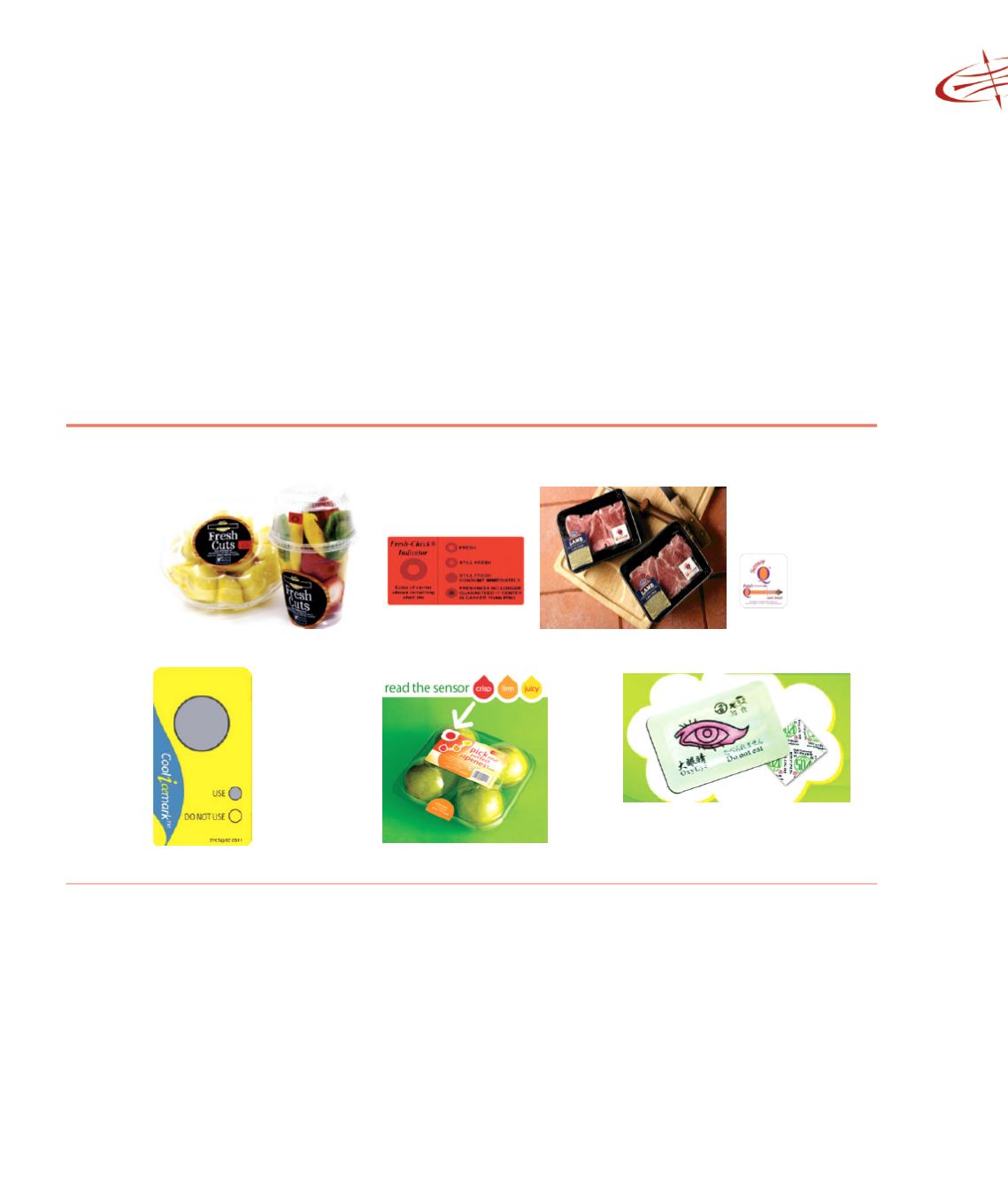
FIGURE 3.7
Active packages examples
Residual oxygen indicator
Time-temperature indicator
Ripening indicator
Photo: reproduction
Freshness indicators
Nanotechnology
The term refers to the technology used in product
development at the nanometer scale (10
-9
m), which
have distinct properties from those of similar products
on the macro scale. These are highlights for the package
area: nanocomposites (nanoclays and resins), carbon
nanoparticles/nanotubes, oxides and metal at the
nanoscale commercialized by manufacturers of resins
and additives for packages.
Nanotechnology applied to cellulosic and plastic
packages can help to overcome their limitations, resulting in:
• Improvement of properties:
gas barrier, humidity barrier, UV
radiation barrier, stiffness flexibility, heat resistance.
• New features:
antimicrobial package, oxygen absorbers,
humidity absorbers, smart packages: sensors and
indicators, self-cleaning surfaces, permanent
antistatic surfaces.