




 80 / 231

Brasil
PackTrends
2020
80
package trends
• Sustainability:
weight reduction - lightweighting - by
improvement of the properties and improve of the
biopolymers limiting properties.
The challenges related to nanotechnology
associated with package are: lack of environmental and
regulatory aspects of food safety that approach this
Biopolymers
technology under development; concern of consumers
subjected to campaigns of environmental groups; high
development and production costs; and longer time
between research and commercialization.
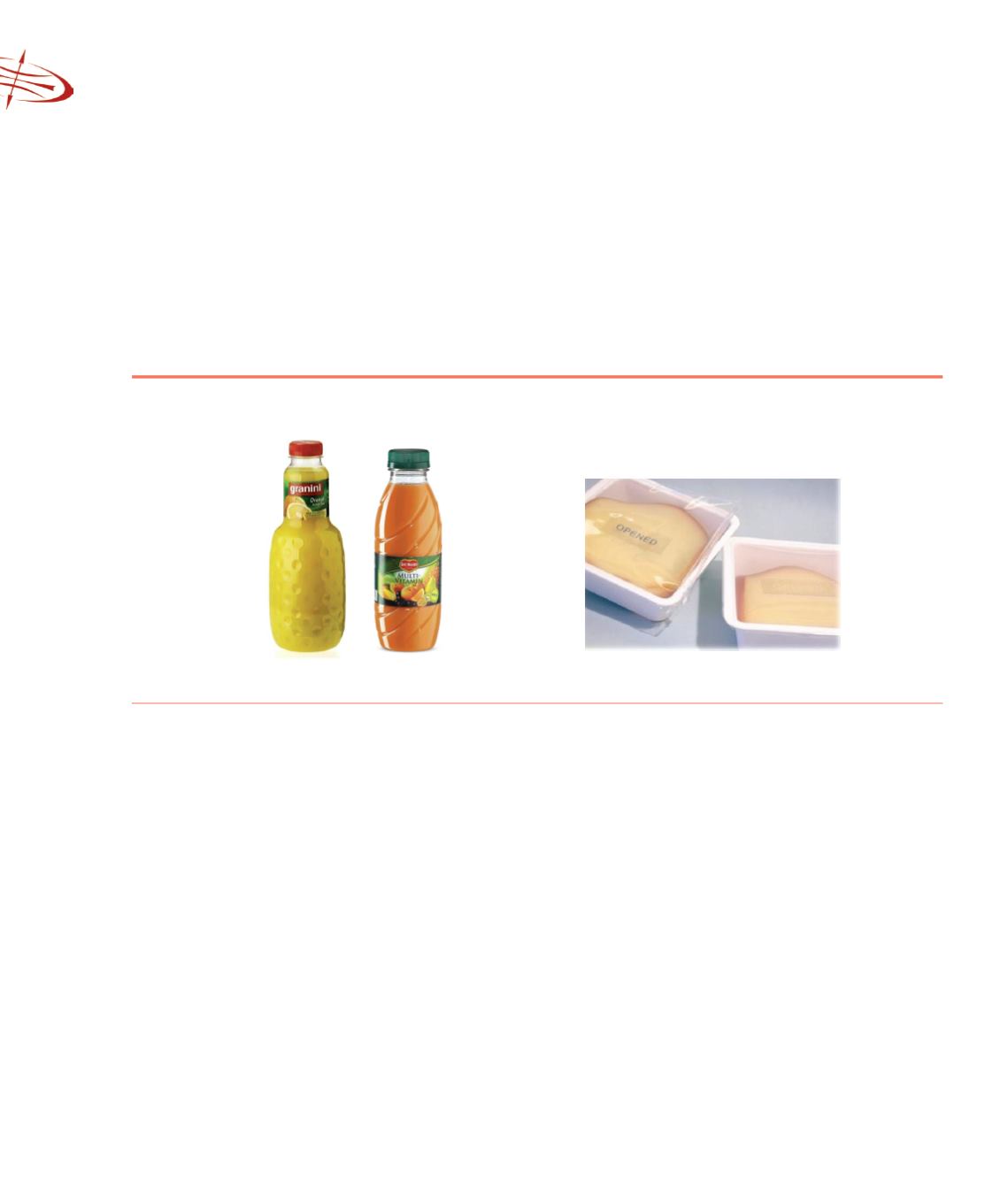
FIGURE 3.8
Examples of nanotechnology applications in package
PLASMAX technology
SiO
x
inner coating
Violation indicator
Photo: reproduction
One of the most significant trends in the package
area is sustainability, which caused great impact on the
development of materials from renewable sources.
Biopolymers, defined by the Brazilian Association
of Technical Standards as polymers or copolymers
from renewable sources (ABNT NBR 15448-1, 2008)
can be from natural origin, or synthesized from raw
materials from renewable sources, or produced by
microorganisms. Given the lack of infrastructure in
industrial composting plants, the tendency is to grow
the recyclable biopolymers market, such as the “Green”
polyethylene from Braskem and Plant-Bottle from Coca-
cola, with advantages such as conservation of energy
and raw materials and saving natural resources.
The challenges of new materials are: overcoming
the limitations in the properties, especially for use
in food packages; increase availability; improve
competitiveness with polymers from lower cost fossil
source; and solve environmental issues, such as
the negative impact on the recycling chain of other
materials and the emission of greenhouse gases, in the
case of biodegradable material that is not designed for
industrial composting plants.
The future is in the manufacture of package
materials from waste/byproducts from industries of
food chain, from the timber industry and from biofuels
production.