




 125 / 231

Brasil
PackTrends
2020
125
aesthetics and identity
5.3 PLEASURE EXPERIENCE – Sensory Stimulation
From a physiological standpoint, the multi-
sensory is directly related to the five senses that
translate the world to our mind, namely, vision, hearing,
touch, taste and smell, and to enable any one of them
or some of them at the same time there is the need for a
stimulus. In a way, the packaging may be responsible for
sharpening the sense of sight and touch, and depending
on the situation, can also stimulate smell and hearing,
leaving out only the palate, which is directly related to
the product.
The introduction of relief in packaging materials
has the primary function of highlighting the trade
mark or the print product and also producing the same
identification by touch, promoting their differentiation
(USO DE ..., 2000). This process is known as embossing
/ debossing and is widely used in the beverage segment,
especially in cans.
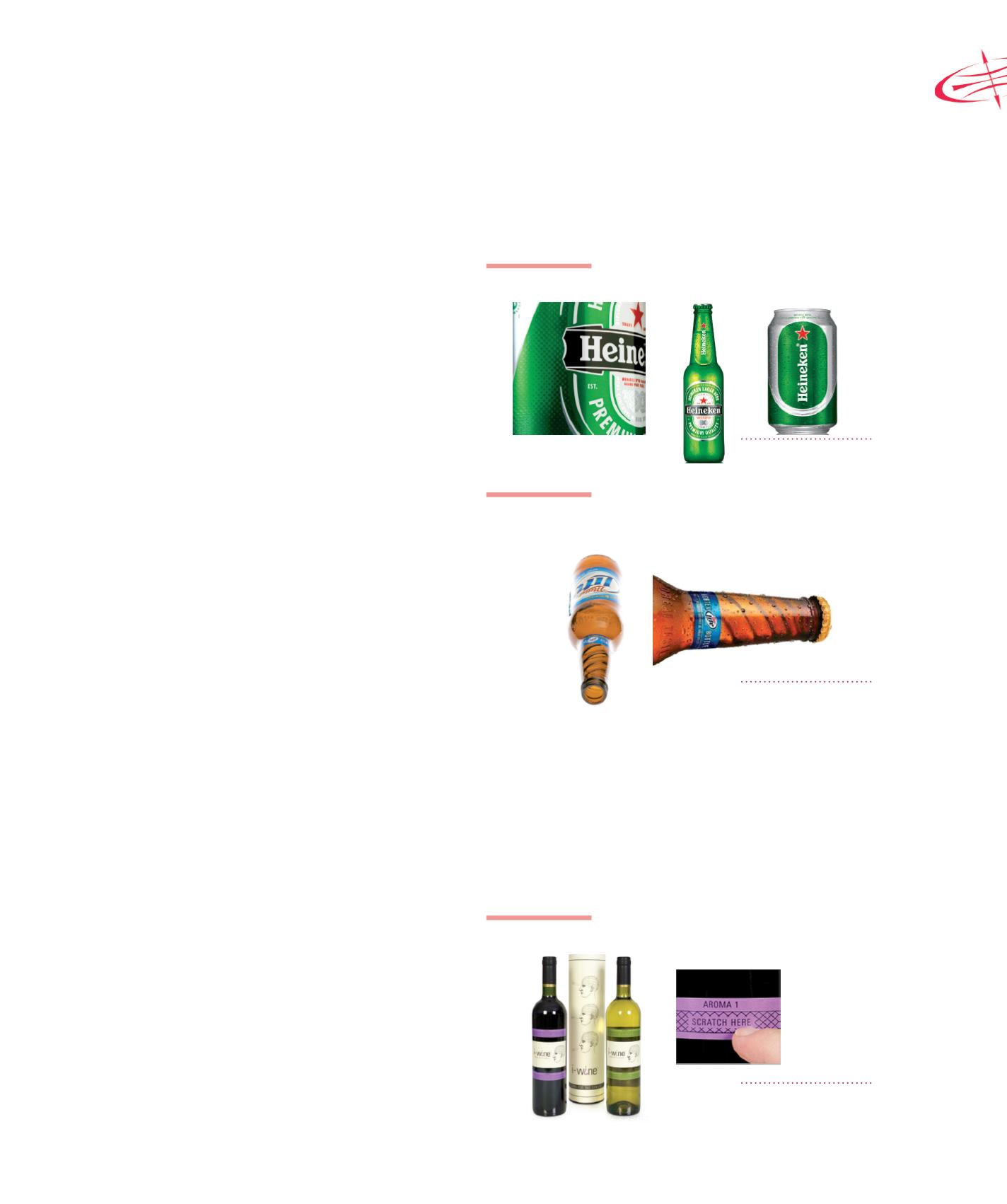
In 2011, the brewery Heineken launched an
aluminum can for a beer called Touch, whose walls
are finished in high relief, providing a sense of texture
when handled by the consumer (Figure 5.29). The
finished texture is the result of the application of a
varnish and a special ink on the package. According
to the manufacturer, a chemical reaction makes the
varnish repel the ink, forming bubbles that create the
embossed on the outer surface of the can. Besides the
tactile aspect, texture also gives greater grip, especially
desirable when the can is wet (MARCANTE.., 2011).
The same company also launched the K2 bottle,
exclusive to the brand, replacing the long neck used
in Brazil and the short neck used in other countries.
The new package will be available in both standard and
raised, but for the Brazilian market only the embossed
bottle was adopted with a curved shoulder and back
logotype (SENSIBILIDADE.., 2011) (Figure 5.29). Also
in the beverage segment, but in a different context
of multi-sensory, the American company Miller Lite
introduced in 2010, the Vortex bottle, designed with
special grooves inside the neck, creating a whirlpool
when poured (Figure 5.30).
FIGURE 5.29
Packages with embossed labels
Source: Press Release
FIGURE 5.30
Bottle with grooves on the
inside of the neck
Source: Press Release
Smell is another sense that can stimulate through
the packages. According to the publication Business
Insights (2010), the
i-wine
product, presented in the
United Kingdom in 2008, proposes a guessing game
by presenting labels with an odor that provide the
necessary clues of the wine´s grape variety. For this,
consumers must scrape the label and smell the aroma
of grapes (Figure 5.31).
FIGURE 5.31
Bottles whose labels give off an odor
Source: Press Release