




 102 / 231

Brasil
PackTrends
2020
102
convenience and simplicity
Nowadays, the consumer has a large number
of options to have meals without leaving the house.
There are many reasons for this attitude, like easiness
and safety, mainly in large urban areas. Besides
delivery systems implemented by restaurants, there
are specialized websites which concentrate access to
different establishments, allowing the client to choose
the meal. Furthermore, many restaurants have invested
in the presentation of their take-out products, as much
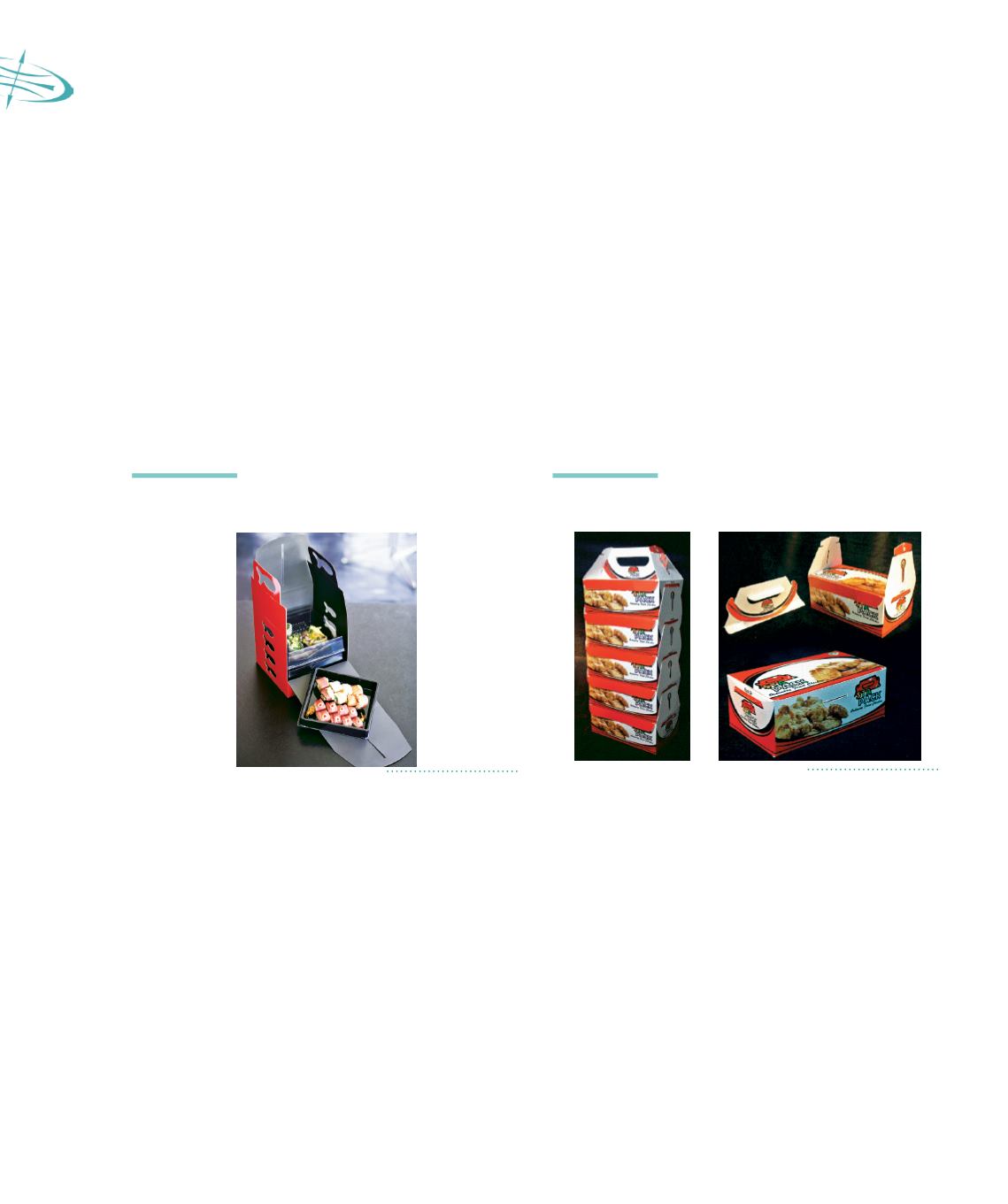
the visual factor as the ease of consumption. An example
of this is the Danish restaurant’s Sticks’n’Sushi (Picture
4.33). It provides an excellent visual along with the
practicality of a system of mini trays, keeping the dishes
organized and separated from each other.
In the same way, Sta-Pack, from BMJ in Indonesia,
offers separated compartments for its dishes without
compromising the ease of transportation (Picture 4.34).
Bringing the restaurant to home
PICTURE 4.33
Package for transporting
ready meals
Source: Press Release
PICTURE 4.34
Stackable packages for ready
meals transportation
Source: Press Release
The concept of interactive packages is related
to the fulfillment of multiple functions and requires or
invites consumer involvement. Besides the protection and
exposition of the product’s brand, the interactive package
adds value. The interactive role that package plays relates
to providing information about the contents or engaging
consumers through creativity and fun (RAITHATHA,
2009).
Regarding information, we find interactive
packages ranging from simple to technological.
Examples of the simple packages can be found easily
at sale points, like packages with information in Braille.
They can be found on the most diverse products and
available in many materials from cardboard, used, for
example, in frozen meals and cereals, to metallic and
glass packages like in chocolates and jellies (Picture
4.35). There are also information systems through
two-dimensional codes, like QR codes and Matrix
Data (Picture 4.36), described in the Quality and New
Technologies chapter. Such codes allow the consumer
to access many product information, like origin,
nutritional value etc.
Another example is Nestlé’s KitKat, for mailing
(Picture 4.37), which comes designed as a postcard
Interactivity